

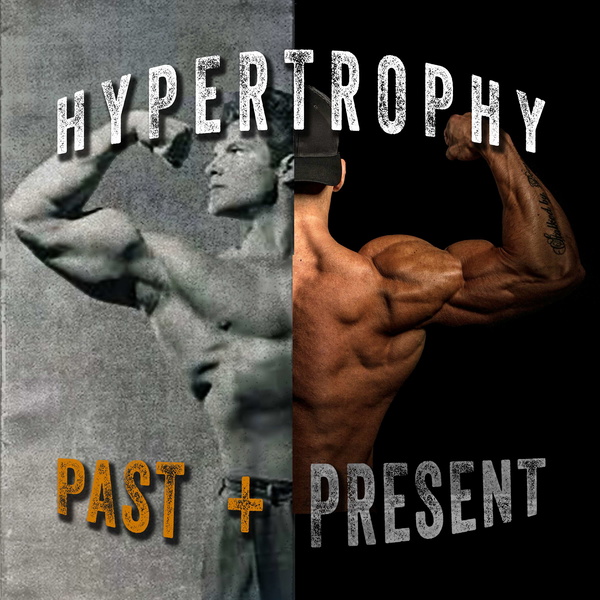
Hypertrophy Past and Present
Chris Beardsley and Jake DoleschalA deep dive into the science of muscle growth. Hosted by Chris Beardsley and Jake Doleschal, this podcast explores hypertrophy training through the lens of pre-steroid era bodybuilding and modern muscle physiology.
| Publishes | Weekly | Episodes | 62 | Founded | a year ago |
|---|---|---|---|---|---|
| Number of Listeners | Categories | FitnessHealth & Fitness | |||
Listen to this Podcast


Latest Episodes
In this episode of Hypertrophy Past & Present, Jake and Chris begin with an early 1950s “muscular bulk” routine from Jack Delinger. They discuss the minimalist, barbell-only full-body program and how exercise variety may need to gradually increase as... more
In this episode of Hypertrophy Past & Present, Jake and Chris begin with a 1972 routine from Bradley J. Steiner and discuss what makes it one of the more sensible "golden era" bodybuilding programs they've reviewed so far and whether splitting exerci... more
In this episode of Hypertrophy Past & Present, Jake and Chris begin with Steve Michalik’s enormous 1972 Mr. America routine and why silver-era routines are the best data set for natural training routines. From there, Jake and Chris explore how the hy... more
In this episode of Hypertrophy Past & Present, Jake and Chris begin with Alan Stephan’s classic Silver Era full-body routine, which he reportedly followed for years while building enormous strength and muscle. This leads into a deeper discussion abou... more
Key Facts




Similar Podcasts
People also subscribe to these shows.


Hosts
Reviews
- Great Show
The show is very informative for someone like me who is not a bodybuilder but looking to gain muscle mass naturally without drugs. The discussions on fatigue management and the implications for programming have been especially useful.
Apple Podcasts5S192837465M United States9 months ago
 - Informative and interesting
‘Great minds think alike’ Chris and Jake are passionate about this topic and that makes it easy listening! They give fascinating insight into bodybuilding from the past, whilst also offering practical advice on how this can apply to our modern training.
Apple Podcasts5emsywobbles United Kingdoma year ago
 - Amazing
This podcast is awesome and super interesting- I follow this guys advice and have broke through plateaus just from changing a few principles.
Apple Podcasts5molbyearlonUnited Kingdoma year ago

Listeners Say
Key themes from listener reviews, highlighting what works and what could be improved about the show.
Chart Rankings
How this podcast ranks in the Apple Podcasts, Spotify and YouTube charts.
Apple Podcasts | #117 | United States/Health & Fitness/Fitness |
Apple Podcasts | #130 | United Kingdom/Health & Fitness/Fitness |
Apple Podcasts | #214 |  Canada/Health & Fitness/Fitness Canada/Health & Fitness/Fitness |
Apple Podcasts | #69 |  Italy/Health & Fitness/Fitness Italy/Health & Fitness/Fitness |
Apple Podcasts | #105 |  Germany/Health & Fitness/Fitness Germany/Health & Fitness/Fitness |
Apple Podcasts | #171 |  France/Health & Fitness/Fitness France/Health & Fitness/Fitness |

Talking Points
Recent interactions between the hosts and their guests.
Audience Metrics
Listeners, social reach, demographics and more for this podcast.
| Listeners per Episode | |
|---|---|
| Gender Skew | |
| Location | |
| Interests | |
| Professions | |
| Age Range | |
| Household Income | |
| Social Media Reach |
Frequently Asked Questions About Hypertrophy Past and Present
What is Hypertrophy Past and Present about and what kind of topics does it cover?
This show offers a deep, evidence-informed look at muscle growth, blending historical pre-steroid bodybuilding principles with modern physiology. Across episodes, discussions consistently center on hypertrophy science, progressive overload, fatigue management, and practical programming frameworks. Interactions between hosts are rigorous yet approachable, often referencing classic eras and contemporary research to challenge conventional training wisdom. A standout aspect is the strong emphasis on interpreting adaptations and recovery signals over chasing rigid weekly targets, plus a willingness to explore niche topics like neuro-mechanical matching and historical circuits for training variety.
Where can I find podcast stats for Hypertrophy Past and Present?
Rephonic provides a wide range of podcast stats for Hypertrophy Past and Present. We scanned the web and collated all of the information that we could find in our comprehensive podcast database. See how many people listen to Hypertrophy Past and Present and access YouTube viewership numbers, download stats, audience demographics, chart rankings, ratings, reviews and more.
How many listeners does Hypertrophy Past and Present get?
Rephonic provides a full set of podcast information for three million podcasts, including the number of listeners. View further listenership figures for Hypertrophy Past and Present, including podcast download numbers and subscriber numbers, so you can make better decisions about which podcasts to sponsor or be a guest on. You will need to upgrade your account to access this premium data.
What are the audience demographics for Hypertrophy Past and Present?
Rephonic provides comprehensive predictive audience data for Hypertrophy Past and Present, including gender skew, age, country, political leaning, income, professions, education level, and interests. You can access these listener demographics by upgrading your account.
How many subscribers and views does Hypertrophy Past and Present have?
To see how many followers or subscribers Hypertrophy Past and Present has on Spotify and other platforms such as Castbox and Podcast Addict, simply upgrade your account. You'll also find viewership figures for their YouTube channel if they have one.
Which podcasts are similar to Hypertrophy Past and Present?
These podcasts share a similar audience with Hypertrophy Past and Present:
1. High Performance Physiology
2. The Revive Stronger Podcast
3. Iron Culture presented by MASS
4. RP Strength Podcast
5. 3D Muscle Journey
How many episodes of Hypertrophy Past and Present are there?
Hypertrophy Past and Present launched a year ago and published 62 episodes to date. You can find more information about this podcast including rankings, audience demographics and engagement in our podcast database.
How do I contact Hypertrophy Past and Present?
Our systems regularly scour the web to find email addresses and social media links for this podcast. We scanned the web and collated all of the contact information that we could find in our podcast database. But in the unlikely event that you can't find what you're looking for, our concierge service lets you request our research team to source better contacts for you.
Where can I see ratings and reviews for Hypertrophy Past and Present?
Rephonic pulls ratings and reviews for Hypertrophy Past and Present from multiple sources, including Spotify, Apple Podcasts, Castbox, and Podcast Addict.
View all the reviews in one place instead of visiting each platform individually and use this information to decide if a show is worth pitching or not.
How do I access podcast episode transcripts for Hypertrophy Past and Present?
Rephonic provides full transcripts for episodes of Hypertrophy Past and Present. Search within each transcript for your keywords, whether they be topics, brands or people, and figure out if it's worth pitching as a guest or sponsor. You can even set-up alerts to get notified when your keywords are mentioned.