

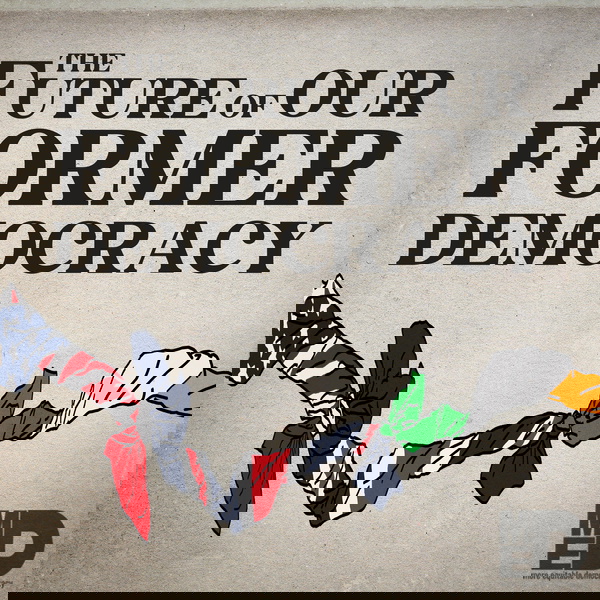
The Future of Our Former Democracy
MED and Mori StrategiesAustralia built its democracy on the American model, then kept revising it: the secret ballot, ranked-choice voting, proportional representation, and elections that Australians across the political spectrum actually trust. In our new season, we travel Down Under to explore how a country so similar to ours, including in its history of white supremacy and Indigenous genocide, ended up with a democra... more
| Publishes | Twice monthly | Episodes | 25 | Founded | 2 years ago |
|---|---|---|---|---|---|
| Number of Listeners | Categories | HistoryDocumentarySociety & Culture | |||
Listen to this Podcast


Latest Episodes
Australia built its democracy on the idea of a "fair go," but who was it actually for?
Ruth and Colin examine the White Australia policy, the Stolen Generations, and the dictation tests designed to keep non-white immigrants out, drawing stark parall... more
How does a British penal colony become one of the world's most trusted democracies?
Ruth and Colin head back to 1788 to trace how a society of convicts and guards pioneered the secret ballot, the living wage, and the eight-hour workday, blending Was... more

Welcome to Season 3 of The Future of Our Former Democracy!
Colin is joined by new co-host Ruth Greenwood, director of Harvard Law School's Election Law Clinic and proud Australian expat, as the show heads Down Under. In Australia, elections are "bor... more
Australia built its democracy on the American model, then kept revising it: the secret ballot, ranked-choice voting, proportional representation, and elections that Australians across the political spectrum actually trust. In our new season, we trave... more
Key Facts




Similar Podcasts
People also subscribe to these shows.


Recent Guests
Hosts
Reviews
- Incredible!
I had never considered how malleable democracy was. The first season really brought that to light. This new season is so good! The production is amazing, I just loved feeling like I was getting an on the ground look at what’s happening in Germany. Five stars!
Apple Podcasts5Micah Smarts 2012 United States6 months ago
 - Thought-provoking look at elections
The Future of Our Former Democracy is a thought-provoking podcast focusing on distilling learnings from other electoral systems around the world, Ireland (Season 1) and Germany (Season 2), and how the USA can improve our own electoral system to reach more representative and equitable outcomes. After listening to the discussions on Ireland's voting system, it motivated me to get involved with local organizations focusing on improving voter outcomes. I highly recommend this podcast to anyone who i... more
Apple Podcasts5crahrigUnited States7 months ago - Cursory conclusions
Didn’t lay good foundation of explaining the 2 systems from the beginning. Episodes don’t delve deep enough into main points of episode. Cursory conclusions abound without adequate intellectual exploration.
Audible1FergusonUnited States7 months ago Didn’t lay good foundation of explaining the 2 systems from the beginning. Episodes don’t delve deep enough into main points of episode. Cursory conclusions abound without adequate intellectual exploration.
Audible1FergusonUnited States7 months ago- Incredibly poor, superficial performance
Herr im Himmel! I was really looking forward to this podcast. I worked as a political journalist in Germany for more than 20 years. I just returned to the States in November after my last tour, which lasted ten years. I also studied German history and speak German. So I like to think that I have a reasonable understanding of the situation in Germany.
This podcast is just so inferior and poor.
It is one thing that it is clearly biased from a far-left perspective. Well, if you know that, you c... more
Apple Podcasts1Chris-747United States8 months ago


Listeners Say
Key themes from listener reviews, highlighting what works and what could be improved about the show.
Chart Rankings
How this podcast ranks in the Apple Podcasts, Spotify and YouTube charts.
Apple Podcasts | #235 | United States/History |
Apple Podcasts | #222 |  Brazil/History Brazil/History |

Talking Points
Recent interactions between the hosts and their guests.
Audience Metrics
Listeners, social reach, demographics and more for this podcast.
| Listeners per Episode | |
|---|---|
| Gender Skew | |
| Location | |
| Interests | |
| Professions | |
| Age Range | |
| Household Income | |
| Social Media Reach |
Frequently Asked Questions About The Future of Our Former Democracy
What is The Future of Our Former Democracy about and what kind of topics does it cover?
A thoughtful deep-dive into how different electoral systems shape democracy, with a strong emphasis on proportional representation, ranked-choice voting, and learning from international examples. Episodes feature historians, political scientists, tour guides, and refugees-turned-advocates who share concrete lessons on representation, voter engagement, and safeguarding democratic participation. The show blends historical context, on-the-ground narratives, and practical reforms, often drawing parallels between Germany, Ireland, and the United States to explore how institutions can both enable and constrain inclusive governance. A standout trait is the blend of rigorous analysis with personal, lived experiences, offering listeners a multi-dime... more
Where can I find podcast stats for The Future of Our Former Democracy ?
Rephonic provides a wide range of podcast stats for The Future of Our Former Democracy . We scanned the web and collated all of the information that we could find in our comprehensive podcast database. See how many people listen to The Future of Our Former Democracy and access YouTube viewership numbers, download stats, audience demographics, chart rankings, ratings, reviews and more.
How many listeners does The Future of Our Former Democracy get?
Rephonic provides a full set of podcast information for four million podcasts, including the number of listeners. View further listenership figures for The Future of Our Former Democracy , including podcast download numbers and subscriber numbers, so you can make better decisions about which podcasts to sponsor or be a guest on. You will need to upgrade your account to access this premium data.
What are the audience demographics for The Future of Our Former Democracy ?
Rephonic provides comprehensive predictive audience data for The Future of Our Former Democracy , including gender skew, age, country, political leaning, income, professions, education level, and interests. You can access these listener demographics by upgrading your account.
How many subscribers and views does The Future of Our Former Democracy have?
To see how many followers or subscribers The Future of Our Former Democracy has on Spotify and other platforms such as Castbox and Podcast Addict, simply upgrade your account. You'll also find viewership figures for their YouTube channel if they have one.
Which podcasts are similar to The Future of Our Former Democracy ?
These podcasts share a similar audience with The Future of Our Former Democracy :
1. The Best People with Nicolle Wallace
2. The Weekly Show with Jon Stewart
3. Runaway Country with Alex Wagner
4. Why Is This Happening? The Chris Hayes Podcast
5. Fresh Air
How many episodes of The Future of Our Former Democracy are there?
The Future of Our Former Democracy launched 2 years ago and published 25 episodes to date. You can find more information about this podcast including rankings, audience demographics and engagement in our podcast database.
How do I contact The Future of Our Former Democracy ?
Our systems regularly scour the web to find email addresses and social media links for this podcast. We scanned the web and collated all of the contact information that we could find in our podcast database. But in the unlikely event that you can't find what you're looking for, our concierge service lets you request our research team to source better contacts for you.
Where can I see ratings and reviews for The Future of Our Former Democracy ?
Rephonic pulls ratings and reviews for The Future of Our Former Democracy from multiple sources, including Spotify, Apple Podcasts, Castbox, and Podcast Addict.
View all the reviews in one place instead of visiting each platform individually and use this information to decide if a show is worth pitching or not.
How do I access podcast episode transcripts for The Future of Our Former Democracy ?
Rephonic provides full transcripts for episodes of The Future of Our Former Democracy . Search within each transcript for your keywords, whether they be topics, brands or people, and figure out if it's worth pitching as a guest or sponsor. You can even set-up alerts to get notified when your keywords are mentioned.
What guests have appeared on The Future of Our Former Democracy ?
Recent guests on The Future of Our Former Democracy include:
1. Thalia Anthony
2. Frank Bongiorno
3. Mark Wong
4. Simon Chen
5. George Cheung
6. Paul Daffy
7. Marija Taflaga
8. Mark Dunn
To view more recent guests and their details, simply upgrade your Rephonic account. You'll also get access to a typical guest profile to help you decide if the show is worth pitching.