

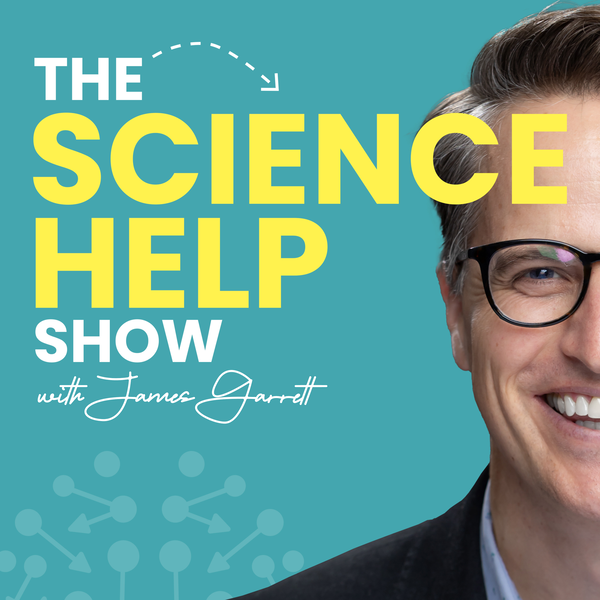
The Science Help Show
James GarrettWelcome to The Science-Help Show, where James transforms real-life questions into real-time breakthroughs. Listeners bring the problems they can't crack—habits they can't start, patterns they can't break, conversations they can't navigate—and James breaks down the brain mechanics that keep them stuck. If you've ever thought, "I know what to do… so why don't I do it?" this is your new home. No fluf... more
| Publishes | Weekly | Episodes | 9 | Founded | 3 months ago |
|---|---|---|---|---|---|
| Categories | EducationSelf-Improvement | ||||
Listen to this Podcast


Latest Episodes
Not all "trusting yourself" is healthy. In this episode, we draw the line between real self-trust (built through data, integrity, and honest course-correction) and self-deception (built through avoidance, ego protection, and confirmation bias). The h... more
Why do good habits feel so hard—even when we "want" them? We start this episode by naming the thing most people never say out loud: shame. Shame about inconsistency. Shame about "knowing better" but not doing better. And how that shame quietly fuels ... more
Episode 7 is packed with practical levers: why stress pushes you into old habits, how to run two-week habit sprints like a scientist, and how to design around nighttime willpower crashes. We cover keystone habits (exercise, morning light), chronotype... more
This week is a habits special edition—three real questions, real science, real tools.
We start with replacing "bad" habits using the habit loop (trigger → behavior → reward) and substitution—then make it practical with friction + physical distance ... more
Most of us do fine when life follows the script. The trouble starts when it doesn't—when something unexpected shows up, the plan breaks, and your brain immediately starts trying to fix, control, or predict what's going to happen next.
In this episo... more
In this episode, we peel back the layers of why change feels so hard by looking at two characters living inside all of us: the Scrooge Brain, guarding its energy like a locked vault, and the Inner Lawyer, building airtight arguments for why you shoul... more
In Episode 3, several callers circle around the same invisible pattern: an unnamed fear quietly steering their lives. We start with a question about whether engaging the prefrontal cortex can dial down physical pain, then move to a coach whose brilli... more
In Episode 2 of The Science-Help Show, James dives into the messy, nuanced science of relationships, identity, and psychological reactance through a powerful real-life question from a very thoughtful listener trying to stop oversharing self-help insi... more
Key Facts


Reviews
- Smart, Helpful, and Accessible
Fantastic. I love how James makes the heady topic of brain science and behavior accessible and practical. The insights James shares based in science are actionable, right away. I appreciate the deep listening and generous way in which James engages with the live questions. As a parent of a neurodivergent child I especially appreciated how he managed a question about behavior adoption/change and the role of dopamine. The world needs this! Thank you!
Apple Podcasts5MTB275 United States3 months ago

Chart Rankings
How this podcast ranks in the Apple Podcasts, Spotify and YouTube charts.
Apple Podcasts | #71 |  New Zealand/Education/Self-Improvement New Zealand/Education/Self-Improvement |
Apple Podcasts | #175 | New Zealand/Education |

Top Self-Improvement Podcasts


Audience Metrics
Listeners, social reach, demographics and more for this podcast.
| Gender Skew | Location | Interests | |||
|---|---|---|---|---|---|
| Professions | Age Range | Household Income | |||
| Social Media Reach | |||||
Frequently Asked Questions About The Science Help Show
Where can I find podcast stats for The Science Help Show?
Rephonic provides a wide range of podcast stats for The Science Help Show. We scanned the web and collated all of the information that we could find in our comprehensive podcast database. See how many people listen to The Science Help Show and access YouTube viewership numbers, download stats, audience demographics, chart rankings, ratings, reviews and more.
How many listeners does The Science Help Show get?
Rephonic provides a full set of podcast information for three million podcasts, including the number of listeners. View further listenership figures for The Science Help Show, including podcast download numbers and subscriber numbers, so you can make better decisions about which podcasts to sponsor or be a guest on. You will need to upgrade your account to access this premium data.
What are the audience demographics for The Science Help Show?
Rephonic provides comprehensive predictive audience data for The Science Help Show, including gender skew, age, country, political leaning, income, professions, education level, and interests. You can access these listener demographics by upgrading your account.
How many subscribers and views does The Science Help Show have?
To see how many followers or subscribers The Science Help Show has on Spotify and other platforms such as Castbox and Podcast Addict, simply upgrade your account. You'll also find viewership figures for their YouTube channel if they have one.
How many episodes of The Science Help Show are there?
The Science Help Show launched 3 months ago and published 9 episodes to date. You can find more information about this podcast including rankings, audience demographics and engagement in our podcast database.
How do I contact The Science Help Show?
Our systems regularly scour the web to find email addresses and social media links for this podcast. We scanned the web and collated all of the contact information that we could find in our podcast database. But in the unlikely event that you can't find what you're looking for, our concierge service lets you request our research team to source better contacts for you.
Where can I see ratings and reviews for The Science Help Show?
Rephonic pulls ratings and reviews for The Science Help Show from multiple sources, including Spotify, Apple Podcasts, Castbox, and Podcast Addict.
View all the reviews in one place instead of visiting each platform individually and use this information to decide if a show is worth pitching or not.
How do I access podcast episode transcripts for The Science Help Show?
Rephonic provides full transcripts for episodes of The Science Help Show. Search within each transcript for your keywords, whether they be topics, brands or people, and figure out if it's worth pitching as a guest or sponsor. You can even set-up alerts to get notified when your keywords are mentioned.