

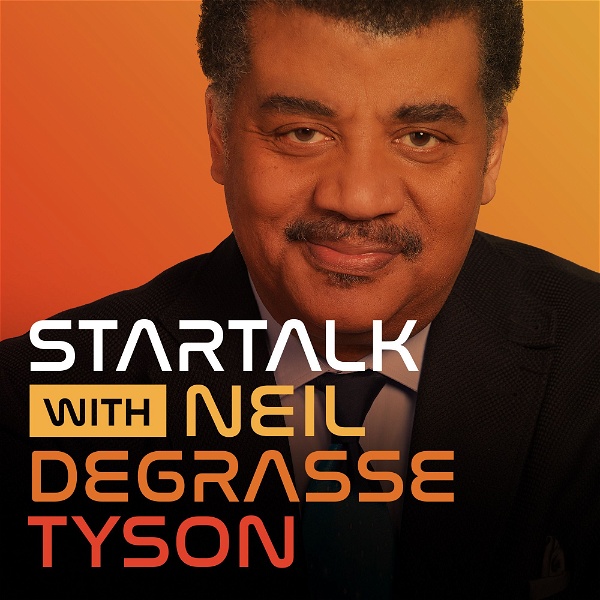
StarTalk with Neil deGrasse Tyson
Neil deGrasse TysonScience, pop culture, and comedy collide on StarTalk Radio! Neil deGrasse Tyson, astrophysicist and Director of New York's Hayden Planetarium, and his comic co-hosts, guest celebrities, and scientific experts explore astronomy, physics, and everything else there is to know about life in the universe. New episodes premiere Tuesdays. Keep Looking Up! Subscribe to SiriusXM Podcasts+ to listen to new ... more
| Publishes | Twice weekly | Episodes | 1142 | Founded | 17 years ago |
|---|---|---|---|---|---|
| Number of Listeners | Categories | ScienceEducation | |||
Listen to this Podcast


Latest Episodes
Would aliens use the same periodic table as us? Neil deGrasse Tyson and comic co-host Negin Farsad sit down with Kate Biberdorf, aka Kate the Chemist, to tackle fan questions about the chemistry of life, diamonds, how fire works, and spontaneous comb... more
If the multiverse exists, where does our universe end and another begin? Neil deGrasse Tyson and comic co-host Chuck Nice tackle a wide-ranging grab bag of fan questions covering bubble universes, the nature of now, fractals, Hoag's Object, and more.... more
Why did intelligence evolve in the universe? Neil deGrasse Tyson, Chuck Nice, and Gary O’Reilly explore the nature of intelligence, information theory, consciousness, and whether AI is actually intelligent at all with David Krakauer, evolutionary bio... more
Why does string theory need ten dimensions? Neil deGrasse Tyson and comic co-host Jordan Klepper sit down with Lara Anderson, string theorist and associate professor of physics at Virginia Tech, to tackle intersecting dimensions, the nature of gravit... more
Key Facts




Similar Podcasts
People also subscribe to these shows.


Recent Guests
Hosts
Reviews
Marvelous
Podcast Addict52 months agopazuzo- Longtime fan of the show
I’ve learned so much from this show / Neil, and even the Cosmos. My mind is always pushing past humanly limits listening, learning, and thinking about the concepts and topics discussed on STR. Great guests as well - keep up the amazing work!
Apple Podcasts5gobirds1997 United States2 months ago
 - Hey Neil personal message
It is well versed about astrophysics make it 45minutes. It is very serious subject please low your laughter I feel you should release remaster edition.
Apple Podcasts5DMR9789 India2 months ago
 - Get Rid of Chuck Nice
He always comments that the scientists that are discovering or have, must be taking drugs, weed, LSD, etc. These scientists are using the scientific method, sober for decades. Why does Chuck Nice have to diminish their discoveries as coming from a mind altering drug experience!!! Instead of pure steadfast genius???
Apple Podcasts1WebWraithUnited States2 months ago - Close to awesome
I love the topics and I love the guests. I love the energy and curiosity. But it’s hard to listen to Neil & other hosts interrupting everyone else. The guests can’t even finish their sentences - even as they’re saying fascinating things.
Apple Podcasts3Lenabear42United States2 months ago


Listeners Say
Key themes from listener reviews, highlighting what works and what could be improved about the show.
Chart Rankings
How this podcast ranks in the Apple Podcasts, Spotify and YouTube charts.
Spotify | #5 | United States/Science |
Spotify | #114 | United States/Trending |
Apple Podcasts | #198 | United States/Top Podcasts |
Apple Podcasts | #6 | United States/Science |
Spotify | #166 |  Canada/Top Podcasts Canada/Top Podcasts |
Spotify | #3 |  United Kingdom/Science United Kingdom/Science |


Talking Points
Recent interactions between the hosts and their guests.
Audience Metrics
Listeners, social reach, demographics and more for this podcast.
| Listeners per Episode | |
|---|---|
| Gender Skew | |
| Location | |
| Interests | |
| Professions | |
| Age Range | |
| Household Income | |
| Social Media Reach |
Frequently Asked Questions About StarTalk
What is StarTalk about and what kind of topics does it cover?
A science-forward show that blends astronomy, physics, and space science with pop culture and humor. Recent episodes center on solar physics, exoplanets, planetary science, and cosmic mysteries, often featuring renowned scientists alongside celebrity guests who probe science questions through storytelling and accessible explanations. The format balances rigorous explanations with entertaining banter, aiming to make complex topics approachable for curious listeners while showcasing the human side of science communication and storytelling. A notable angle is how entertainment industry figures engage with scientific ideas, adding crossover appeal without sacrificing depth. It's likely to attract listeners who enjoy bright, wide-ranging convers... more
Where can I find podcast stats for StarTalk?
Rephonic provides a wide range of podcast stats for StarTalk. We scanned the web and collated all of the information that we could find in our comprehensive podcast database. See how many people listen to StarTalk and access YouTube viewership numbers, download stats, audience demographics, chart rankings, ratings, reviews and more.
How many listeners does StarTalk get?
Rephonic provides a full set of podcast information for four million podcasts, including the number of listeners. View further listenership figures for StarTalk, including podcast download numbers and subscriber numbers, so you can make better decisions about which podcasts to sponsor or be a guest on. You will need to upgrade your account to access this premium data.
What are the audience demographics for StarTalk?
Rephonic provides comprehensive predictive audience data for StarTalk, including gender skew, age, country, political leaning, income, professions, education level, and interests. You can access these listener demographics by upgrading your account.
How many subscribers and views does StarTalk have?
To see how many followers or subscribers StarTalk has on Spotify and other platforms such as Castbox and Podcast Addict, simply upgrade your account. You'll also find viewership figures for their YouTube channel if they have one.
Which podcasts are similar to StarTalk?
These podcasts share a similar audience with StarTalk:
1. Daniel and Kelly’s Extraordinary Universe
2. The Supermassive Podcast
3. Why This Universe?
4. Sean Carroll's Mindscape: Science, Society, Philosophy, Culture, Arts, and Ideas
5. SpaceTime with Stuart Gary
How many episodes of StarTalk are there?
StarTalk launched 17 years ago and published 1142 episodes to date. You can find more information about this podcast including rankings, audience demographics and engagement in our podcast database.
How do I contact StarTalk?
Our systems regularly scour the web to find email addresses and social media links for this podcast. We scanned the web and collated all of the contact information that we could find in our podcast database. But in the unlikely event that you can't find what you're looking for, our concierge service lets you request our research team to source better contacts for you.
Where can I see ratings and reviews for StarTalk?
Rephonic pulls ratings and reviews for StarTalk from multiple sources, including Spotify, Apple Podcasts, Castbox, and Podcast Addict.
View all the reviews in one place instead of visiting each platform individually and use this information to decide if a show is worth pitching or not.
How do I access podcast episode transcripts for StarTalk?
Rephonic provides full transcripts for episodes of StarTalk. Search within each transcript for your keywords, whether they be topics, brands or people, and figure out if it's worth pitching as a guest or sponsor. You can even set-up alerts to get notified when your keywords are mentioned.
What guests have appeared on StarTalk?
Recent guests on StarTalk include:
1. David Krakauer
2. Moriba Jah
3. Lindsey Nix Walker
4. Hakeem Oluseyi
5. Gül Dölen
6. Kathryn Huff
7. Jason Rhodes
8. David Eagleman
To view more recent guests and their details, simply upgrade your Rephonic account. You'll also get access to a typical guest profile to help you decide if the show is worth pitching.