
Rephonic
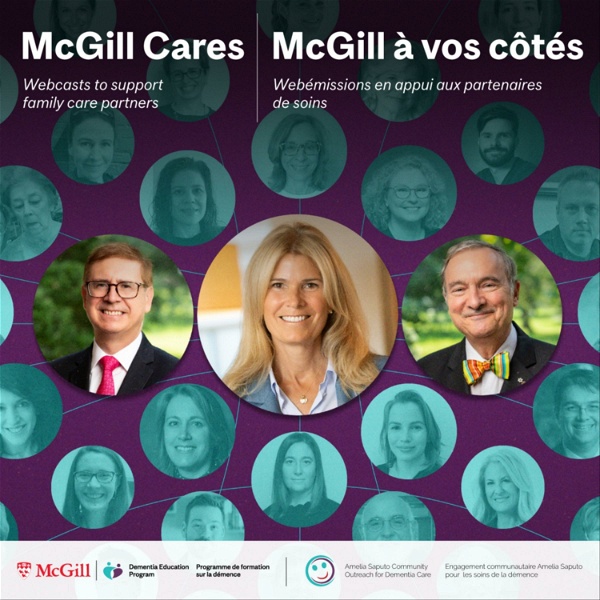
Artwork for McGill Cares
Dementia
Alzheimer's Disease
Multiple Sclerosis
Music Therapy
Anosognosia
Aging
Home Care
Caregiver Guilt
Caregiving
Canage
Cananimab
Lecanemab
Etna
Laura Tamblyn Watts
Mcgill University Dementia Education Program
Lecanomab
Mcgill University
Memory
Quebec Health Care System
Caregiver Circle Of Care

During candid, 30-minute interviews with leading experts, Claire Webster, Alzheimer Care Consultant and Founder of the McGill University Dementia Education Program, explores topics related to caring for a loved one with dementia.

PublishesDailyEpisodes149Founded5 years ago
Language
French
Number of ListenersCategories
MedicineHealth & Fitness

Listen to this Podcast

Artwork for McGill Cares

Latest Episodes

Carmen Desjardins, B. Sc. (inf.), est chef du Programme de démence avec comorbidités psychiatriques à l’Institut de recherche Douglas. Elle a été chef et fondatrice de l’équipe ambulatoire des symptômes comportementaux et psychologiques de la démence... more

Carmen Desjardins, BSc(N) is Program Manager of the Dementia and Psychiatric Comorbidities Program at the Douglas Research Institute. She was the chief and founder of the Behavioural and Psychological Symptoms of Dementia (BPSD) ambulatory team of th... more

YouTube

Zelda Freitas, M.S.S., est travailleuse sociale et conseillère clinique en pratique professionnelle pour les Services de réadaptation et les Services multidisciplinaires du CIUSSS Centre-Ouest-de-l’Île-de-Montréal. Elle est aussi professeure adjointe... more

Zelda Freitas, MSW, is a social worker and clinical advisor in professional practice within the Department of Rehabilitation and Multidisciplinary Services at the CIUSSS Centre-Ouest-de-l’Île-de-Montréal. She is also an assistant professor and course... more

YouTube

Key Facts

Accepts Guests
Accepts Sponsors
Contact Information
Podcast Host
Number of Listeners
Find out how many people listen to this podcast per episode and each month.

Similar Podcasts

People also subscribe to these shows.

Dementia Matters
Dementia MattersWisconsin Alzheimer‘s Disease Research Center
Huberman Lab
Huberman LabScicomm Media

Recent Guests

Zelda Freetis
Social worker and clinical consultant, involved in caregiver-focused projects
CIUS Centre-Ouest de Montréal, Université McGill
Episode: McGill à vos côtés - Surmonter la culpabilité de la personne aidante et bâtir votre cercle de soins
Zelda Freitas
Social worker and clinical advisor in professional practice; assistant professor and course lecturer at McGill University's School of Social Work; founding member of the Caregiver Grief Connection Project
CIUSS Centre Ouest de l'Eleu de Marial / McGill University School of Social Work
Episode: McGill Cares - Overcoming Caregiver Guilt and Building Your Circle of Care
Etienne de Villiers-Sidani
Neurologue, neuroscientifique et entrepreneur; directeur de la clinique des troubles neurocognitifs au Montreal Neurological Institute
Montreal Neurological Institute
Episode: McGill à vos côtés - La sclérose en plaques et le cerveau : du diagnostic à l’innovation numérique
Etienne de Villiers-Sedani
Neurologist, neuroscientist and entrepreneur; director of the Cognitive Disorders Clinic at the Montreal Neurological Institute
Montreal Neurological Institute
Episode: McGill Cares - Multiple Sclerosis and the Brain: From Diagnosis to Digital Innovation
Dr. Thomas Tannou
Gériatre à l'Institut universitaire de gériatrie de Montréal et professeur adjoint de clinique
Université de Montréal / Institut universitaire de gériatrie de Montréal
Episode: McGill à vos côtés - Troubles neurocognitifs et perte de perspicacité : comprendre l’anosognosie
Dr. Julia Chabot
Gériatre, Professeure au Département de médecine de McGill,Présidente de l'Association des Gériâtres du Québec
Centre hospitalier de l'hôpital St. Mary's / McGill University
Episode: McGill à vos côtés : Les bienfaits de la musique pour les personnes atteintes de troubles neurocognitifs
Samir Sinha
Nationally respected geriatrician, lead of the National Institute on Aging's Small Steps Big Difference Campaign
Sinai Health System; University Health Network; University of Toronto
Episode: McGill Cares : A national public education campaign to promote brain health
Laura Tamblyn Watts
CEO of CanAge, elder-care advocate, author
CanAge, University of Toronto (affiliation mentioned)
Episode: McGill à vos côtés : Parlons du vieillissement des parents
Simon Ducharme
Neuropsychiatrist, clinical researcher
Institut Douglas; Institut neurologique de Montréal
Episode: Prendre soin d’une personne atteinte d’un trouble neurocognitif : ce qu’il faut savoir sur les hallucinations, les troubles délirants et la paranoïa

Host

Claire Webster
Host of the show; dementia care consultant and founder of the McGill University Dementia Education Program

Reviews

5.0 out of 5 stars from 8 ratings
  • a great resource for learning and coping

    I wish there was an Ontario based resource like this.

    Apple Podcasts
    5
    Bristolmalarkey
    Canada2 years ago

Listeners Say

Key themes from listener reviews, highlighting what works and what could be improved about the show.

Credible guests with real-world resources and clear takeaways.
Thoughtful, practical guidance for navigating dementia care and caregiver burnout.
Audience-friendly discussions that balance medical detail with actionable advice.
Great resource for families seeking plan-ahead strategies and compassionate care insights.

Chart Rankings

How this podcast ranks in the Apple Podcasts, Spotify and YouTube charts.

Talking Points

Recent interactions between the hosts and their guests.

McGill Cares : A national public education campaign to promote brain health
Q: Can you walk us through the latest evidence and why prevention is becoming such a major area of focus worldwide?
Dr. Sinha explains that aging and dementia are not an inevitable part of getting older; evidence from Lancet and other bodies supports multiple modifiable factors—like physical activity, vascular health, social engagement, and diet—that can prevent or delay dementia in a significant fraction of cases.
Caring for someone with dementia: What you need to know about hallucinations, delusions and paranoia
Q: When might medications be appropriate for these symptoms, and what are the risks?
Medications, particularly antipsychotics, can significantly reduce symptom intensity but must be started in very small doses and monitored closely due to side effects, including sleepiness, movement disorders, and even a small risk of stroke or death in dementia patients. Reassessment every six months is recommended, and use should be cautious especially in Lewy Body Dementia.
Caring for someone with dementia: What you need to know about hallucinations, delusions and paranoia
Q: What non-pharmacological strategies can caregivers use when someone is experiencing paranoia or hallucinations?
Caregivers should avoid arguing or trying to disprove the belief; instead, respond with calm, non-confrontational conversation and redirect the person to another activity, such as music or going outside, while ensuring safety. Identifying triggers and adjusting routines or the environment can reduce episodes, and involving other family members can help share the load and maintain consistent messaging.
Caring for someone with dementia: What you need to know about hallucinations, delusions and paranoia
Q: Let's begin. If you can please help us understand why dementia sometimes leads to symptoms such as delusions, hallucinations, and paranoia.
The guest explains that hallucinations are sensory experiences without real input, while delusions are fixed beliefs; these symptoms appear across dementias but have disease-specific patterns, such as vivid visual hallucinations in Lewy Body Dementia and more delusions in Alzheimer's, often tied to memory impairment and misinterpretation of events. They also emphasize the emotional toll on caregivers and the importance of viewing these symptoms as disease-driven rather than deliberate actions by the patient.
McGill à vos côtés : Les bienfaits de la musique pour les personnes atteintes de troubles neurocognitifs
Q: Dr. Chabot, basé sur le documentaire, le clip que nous venons juste de voir, comment est-ce que la musique peut-elle contribuer au bien-être des personnes qui sont atteintes ?
La musique stimule de nombreuses régions du cerveau simultanément, favorise le langage et la mémoire, augmente la dopamine et peut diminuer l'anxiété et la douleur, tout en facilitant des moments de communication et de remémoration significatifs.

Audience Metrics

Listeners, social reach, demographics and more for this podcast.

Listeners per Episode
Gender Skew
Location
Interests
Professions
Age Range
Household Income
Social Media Reach

Frequently Asked Questions About McGill Cares

What is McGill Cares about and what kind of topics does it cover?

This show features candid, expert-led conversations focused on dementia care, aging, and practical guidance for families navigating caregiving. Episodes routinely explore caregiver strategies, medical advances in dementia (including new treatments and diagnostic tools), neurocognitive symptoms, and non-pharmacological approaches like music therapy. Notably, guests include clinicians, researchers, elder-care advocates, and caregiver voices, all sharing actionable resources, policy context, and real-world tips for planning, safety, and quality of life. The series often centers on navigating healthcare systems, family dynamics, and planning ahead to reduce burnout and make caregiving more sustainable, with a strong emphasis on autonomy for lov... more

Where can I find podcast stats for McGill Cares?

Rephonic provides a wide range of podcast stats for McGill Cares. We scanned the web and collated all of the information that we could find in our comprehensive podcast database. See how many people listen to McGill Cares and access YouTube viewership numbers, download stats, audience demographics, chart rankings, ratings, reviews and more.

How many listeners does McGill Cares get?

Rephonic provides a full set of podcast information for three million podcasts, including the number of listeners. View further listenership figures for McGill Cares, including podcast download numbers and subscriber numbers, so you can make better decisions about which podcasts to sponsor or be a guest on. You will need to upgrade your account to access this premium data.

What are the audience demographics for McGill Cares?

Rephonic provides comprehensive predictive audience data for McGill Cares, including gender skew, age, country, political leaning, income, professions, education level, and interests. You can access these listener demographics by upgrading your account.

How many subscribers and views does McGill Cares have?

To see how many followers or subscribers McGill Cares has on Spotify and other platforms such as Castbox and Podcast Addict, simply upgrade your account. You'll also find viewership figures for their YouTube channel if they have one.

Which podcasts are similar to McGill Cares?

These podcasts share a similar audience with McGill Cares:

1. Dementia Matters
2. Huberman Lab
3. ZOE Science & Nutrition

How many episodes of McGill Cares are there?

McGill Cares launched 5 years ago and published 149 episodes to date. You can find more information about this podcast including rankings, audience demographics and engagement in our podcast database.

How do I contact McGill Cares?

Our systems regularly scour the web to find email addresses and social media links for this podcast. We scanned the web and collated all of the contact information that we could find in our podcast database. But in the unlikely event that you can't find what you're looking for, our concierge service lets you request our research team to source better contacts for you.

Where can I see ratings and reviews for McGill Cares?

Rephonic pulls ratings and reviews for McGill Cares from multiple sources, including Spotify, Apple Podcasts, Castbox, and Podcast Addict.

View all the reviews in one place instead of visiting each platform individually and use this information to decide if a show is worth pitching or not.

How do I access podcast episode transcripts for McGill Cares?

Rephonic provides full transcripts for episodes of McGill Cares. Search within each transcript for your keywords, whether they be topics, brands or people, and figure out if it's worth pitching as a guest or sponsor. You can even set-up alerts to get notified when your keywords are mentioned.

What guests have appeared on McGill Cares?

Recent guests on McGill Cares include:

1. Zelda Freetis
2. Zelda Freitas
3. Etienne de Villiers-Sidani
4. Etienne de Villiers-Sedani
5. Dr. Thomas Tannou
6. Dr. Julia Chabot
7. Samir Sinha
8. Laura Tamblyn Watts

To view more recent guests and their details, simply upgrade your Rephonic account. You'll also get access to a typical guest profile to help you decide if the show is worth pitching.

Find and pitch the right podcasts

We help savvy brands, marketers and PR professionals to find the right podcasts for any topic or niche. Get the data and contacts you need to pitch podcasts at scale and turn listeners into customers.
Try it free for 7 days