

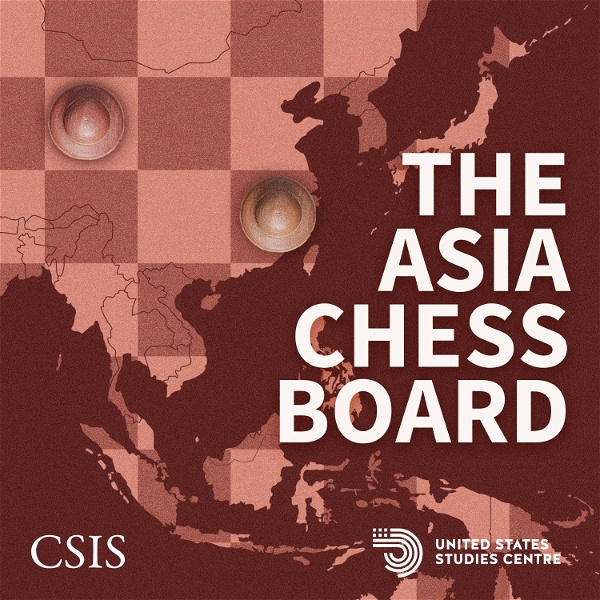
The Asia Chessboard
Center for Strategic and International StudiesThe “Asia Chessboard” features in-depth conversations with the most prominent strategic thinkers on Asia. Host Michael Green, Henry A. Kissinger Chair at CSIS and CEO of the United States Studies Centre, takes the debate beyond the headlines of the day to explore the historical context and inside decision-making process on major geopolitical developments from the Himalayas to the South China Sea. ... more
| Publishes | Twice monthly | Episodes | 137 | Founded | 7 years ago |
|---|---|---|---|---|---|
| Number of Listeners | Category | News | |||
Listen to this Podcast


Latest Episodes
In this episode, Mike is joined by Dr. Sheena Chestnut Greitens, Associate Professor at the LBJ School of Public Affairs at the University of Texas at Austin. They discuss how regime survival concerns among the Indo-Pacific’s authoritarian powers are... more

In this episode, Mike sits down with Randall Schriver, Chairman of the Board at the Institute for Indo-Pacific Security and former Assistant Secretary of Defense for Indo-Pacific Security Affairs (January 2018-December 2019), to take stock of America... more
Mike is joined by Professor Vipin Narang, the Frank Stanton Professor of Nuclear Security and Political Science and inaugural director of MIT SSP’s Center for Nuclear Security Policy (CNSP). From March 2022 to August 2024, he served as Principal Depu... more
What does a more uncertain transatlantic relationship mean for Europe’s role in the Indo-Pacific? Mike sits down with Dr Gorana Grgić, Head of the Global Security Team at ETH Zürich’s Center for Security Studies and Non-Resident Fellow at the United ... more
Key Facts




Similar Podcasts
People also subscribe to these shows.


Recent Guests
Host
Reviews
- Worthwhile – with Caveats
Interesting discussions and sometimes astute analyses of the malevolent CCP threat facing the liberal West. The podcast is, however, frequently let down by a consistent pro-Democrat political bias (via-à-vis internal US politics) and a predilection for some uninterrogated foreign policy shibboleths and bromides. This is typical of CSIS. One would prefer less of a party political dimension to its analyses.
It often reads like yet another formulaic and hive-minded brief from the nomenklatura of F... more
Apple Podcasts2Bibliophenia United Kingdoma month ago
 - Worthwhile – with Caveats
Interesting discussions and sometimes astute analyses of the malevolent CCP threat facing the liberal West. The podcast is, however, unfortunately let down at times by political bias (via-à-vis internal US politics) and a predilection for some uninterrogated foreign policy shibboleths and bromides.
It often reads like yet another formulaic and hive-minded essay from the nomenklatura of Foreign Affairs magazine, a group which (like most Western leaders) was too inept to grasp the threat posed b... more
Apple Podcasts2BibliopheniaUnited Kingdoma month ago - The Iran Wars (1979 - pres)
The Iranian Theocracy has been at war with the US since 1979.
Why do we doubt that they don’t mean it when they chant, “Death to America” for 47yrs, are the biggest state sponsor of terrorism - killing hundreds & wounded thousands of Americans.
They took our diplomats hostage in 1979-1981, we had to take out their navy when they mined to close down the Strait of Hormuz in 1987.
Iran is oil rich, but the theocracy wants a nuclear weapon to use against Israel, what they describe as, “a one b... more
Apple Podcasts5another RJF United States6 months ago
 - Still too conventional
In the world changing at this peace, this type of analysis can be misleading overall
Apple Podcasts2ЮлонаUnited States2 years ago - True experts from the arena
I don’t listen to every episode but I have yet to listen to one that I didn’t love and gain some new angle from. Bravo CSIS
Apple Podcasts5Eric StaibUnited States2 years ago

Listeners Say
Key themes from listener reviews, highlighting what works and what could be improved about the show.
Chart Rankings
How this podcast ranks in the Apple Podcasts, Spotify and YouTube charts.
Apple Podcasts | #232 |  Indonesia/News Indonesia/News |

Talking Points
Recent interactions between the hosts and their guests.
Audience Metrics
Listeners, social reach, demographics and more for this podcast.
| Listeners per Episode | |
|---|---|
| Gender Skew | |
| Location | |
| Interests | |
| Professions | |
| Age Range | |
| Household Income | |
| Social Media Reach |
Frequently Asked Questions About The Asia Chessboard
What is The Asia Chessboard about and what kind of topics does it cover?
Analyses center on Indo-Pacific geopolitics, allied strategy, and great-power competition, with frequent deep-dives into how policy, technology, and alliances shape regional security. Conversations often feature senior policymakers, top think-tank scholars, and regional experts discussing US strategy in Asia, China's rise, Taiwan, the Pacific Islands, India–US relations, and the role of alliances like AUKUS and the Quad. A standout trait is rigorous, context-rich debates that connect historical patterns to current decision-making, making it valuable for listeners who want textured, policy-forward insights beyond headlines. The format tends to mix strategic framing with practical implications for policymakers, business leaders, and defense p... more
Where can I find podcast stats for The Asia Chessboard?
Rephonic provides a wide range of podcast stats for The Asia Chessboard. We scanned the web and collated all of the information that we could find in our comprehensive podcast database. See how many people listen to The Asia Chessboard and access YouTube viewership numbers, download stats, audience demographics, chart rankings, ratings, reviews and more.
How many listeners does The Asia Chessboard get?
Rephonic provides a full set of podcast information for four million podcasts, including the number of listeners. View further listenership figures for The Asia Chessboard, including podcast download numbers and subscriber numbers, so you can make better decisions about which podcasts to sponsor or be a guest on. You will need to upgrade your account to access this premium data.
What are the audience demographics for The Asia Chessboard?
Rephonic provides comprehensive predictive audience data for The Asia Chessboard, including gender skew, age, country, political leaning, income, professions, education level, and interests. You can access these listener demographics by upgrading your account.
How many subscribers and views does The Asia Chessboard have?
To see how many followers or subscribers The Asia Chessboard has on Spotify and other platforms such as Castbox and Podcast Addict, simply upgrade your account. You'll also find viewership figures for their YouTube channel if they have one.
Which podcasts are similar to The Asia Chessboard?
These podcasts share a similar audience with The Asia Chessboard:
1. ChinaPower
2. Pekingology
3. Asia Geopolitics
4. The President’s Inbox
5. Russian Roulette
How many episodes of The Asia Chessboard are there?
The Asia Chessboard launched 7 years ago and published 137 episodes to date. You can find more information about this podcast including rankings, audience demographics and engagement in our podcast database.
How do I contact The Asia Chessboard?
Our systems regularly scour the web to find email addresses and social media links for this podcast. We scanned the web and collated all of the contact information that we could find in our podcast database. But in the unlikely event that you can't find what you're looking for, our concierge service lets you request our research team to source better contacts for you.
Where can I see ratings and reviews for The Asia Chessboard?
Rephonic pulls ratings and reviews for The Asia Chessboard from multiple sources, including Spotify, Apple Podcasts, Castbox, and Podcast Addict.
View all the reviews in one place instead of visiting each platform individually and use this information to decide if a show is worth pitching or not.
How do I access podcast episode transcripts for The Asia Chessboard?
Rephonic provides full transcripts for episodes of The Asia Chessboard. Search within each transcript for your keywords, whether they be topics, brands or people, and figure out if it's worth pitching as a guest or sponsor. You can even set-up alerts to get notified when your keywords are mentioned.
What guests have appeared on The Asia Chessboard?
Recent guests on The Asia Chessboard include:
1. Sheena Chestnut Greitens
2. Randall Schriver
3. Not indicated
4. Vipin Narang
5. Gorana Grgić
6. Arzan Tarapore
7. Bryan Clark
8. Laura Stone
To view more recent guests and their details, simply upgrade your Rephonic account. You'll also get access to a typical guest profile to help you decide if the show is worth pitching.