

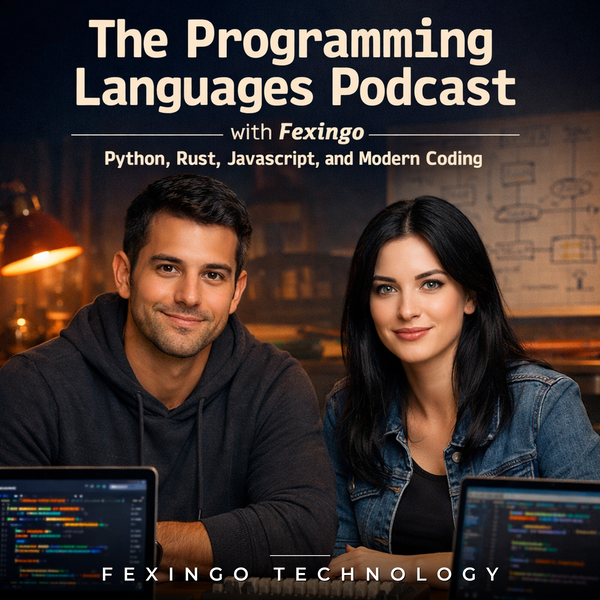
The Programming Languages Podcast with Fexingo: Python, Rust, JavaScript, and Modern Coding
FexingoEvery line of code is a decision, and every programming language encodes a philosophy. In The Programming Languages Podcast, Lucas and Luna move past syntax flame wars to examine the actual trade-offs behind Python, Rust, JavaScript, and the modern coding stack. Each episode dissects a specific language feature, framework choice, or ecosystem shift — from Rust's borrow checker and memory safety gu... more
| Publishes | Daily | Episodes | 111 | Founded | 2 months ago |
|---|---|---|---|---|---|
| Number of Listeners | Category | Business | |||
Listen to this Podcast


Latest Episodes
Lucas and Luna dive into Svelte's rising developer satisfaction scores and its unique compile-time approach that eliminates the virtual DOM. They examine how Svelte 5's runes syntax is reshaping reactive state management, and why companies like Apple... more
Lucas and Luna dive into TypeScript's explosive growth in 2026. With over 60% of JavaScript developers now using TypeScript in production, and major frameworks like React, Vue, and Svelte shipping first-class TypeScript support, the language has beco... more
This episode explores why Lua remains a dominant scripting language in gaming and embedded systems in 2026. Lucas and Luna dive into Lua's lightweight design, its role in game engines like Roblox and World of Warcraft, and its surprising use in IoT d... more
Episode 108 of The Programming Languages Podcast dives into Haskell's role in the financial industry. Lucas and Luna explore how banks and trading firms use Haskell for high-stakes systems that demand correctness and reliability. They discuss Jane St... more




Recent Guests
Hosts
Chart Rankings
How this podcast ranks in the Apple Podcasts, Spotify and YouTube charts.
Apple Podcasts | #196 |  Mexico/Business Mexico/Business |

Talking Points
Recent interactions between the hosts and their guests.
Audience Metrics
Listeners, social reach, demographics and more for this podcast.
| Listeners per Episode | |
|---|---|
| Gender Skew | |
| Location | |
| Interests | |
| Professions | |
| Age Range | |
| Household Income | |
| Social Media Reach |
Frequently Asked Questions About This Podcast
What is This Podcast about and what kind of topics does it cover?
Programming-language-focused discussions that weigh trade-offs behind Python, Rust, JavaScript, and related ecosystems are the heart of this show. Episodes typically unpack concrete language features, tooling choices, and ecosystem shifts, anchored by real-world benchmarks, case studies, and hands-on evaluation of projects like Deno, PyPy, and language runtimes. The hosts balance data-driven analysis with practical skepticism, often comparing performance, safety, and productivity across languages while highlighting how design decisions shape concurrency, deployment, and developer experience. A standout trait is the founders' emphasis on understanding the why behind language decisions, not just the what, which helps listeners make informed c... more
Where can I find podcast stats for this podcast?
Rephonic provides a wide range of podcast stats for this podcast. We scanned the web and collated all of the information that we could find in our comprehensive podcast database. See how many people listen to this podcast and access YouTube viewership numbers, download stats, audience demographics, chart rankings, ratings, reviews and more.
How many listeners does this podcast get?
Rephonic provides a full set of podcast information for three million podcasts, including the number of listeners. View further listenership figures for this podcast, including podcast download numbers and subscriber numbers, so you can make better decisions about which podcasts to sponsor or be a guest on. You will need to upgrade your account to access this premium data.
What are the audience demographics for this podcast?
Rephonic provides comprehensive predictive audience data for this podcast, including gender skew, age, country, political leaning, income, professions, education level, and interests. You can access these listener demographics by upgrading your account.
How many subscribers and views does this podcast have?
To see how many followers or subscribers this podcast has on Spotify and other platforms such as Castbox and Podcast Addict, simply upgrade your account. You'll also find viewership figures for their YouTube channel if they have one.
Which podcasts are similar to this podcast?
These podcasts share a similar audience with this podcast:
How many episodes of this podcast are there?
this podcast launched 2 months ago and published 111 episodes to date. You can find more information about this podcast including rankings, audience demographics and engagement in our podcast database.
How do I contact this podcast?
Our systems regularly scour the web to find email addresses and social media links for this podcast. We scanned the web and collated all of the contact information that we could find in our podcast database. But in the unlikely event that you can't find what you're looking for, our concierge service lets you request our research team to source better contacts for you.
Where can I see ratings and reviews for this podcast?
Rephonic pulls ratings and reviews for this podcast from multiple sources, including Spotify, Apple Podcasts, Castbox, and Podcast Addict.
View all the reviews in one place instead of visiting each platform individually and use this information to decide if a show is worth pitching or not.
How do I access podcast episode transcripts for this podcast?
Rephonic provides full transcripts for episodes of this podcast. Search within each transcript for your keywords, whether they be topics, brands or people, and figure out if it's worth pitching as a guest or sponsor. You can even set-up alerts to get notified when your keywords are mentioned.
What guests have appeared on this podcast?
Recent guests on this podcast include:
1. Chris Latner
To view more recent guests and their details, simply upgrade your Rephonic account. You'll also get access to a typical guest profile to help you decide if the show is worth pitching.