

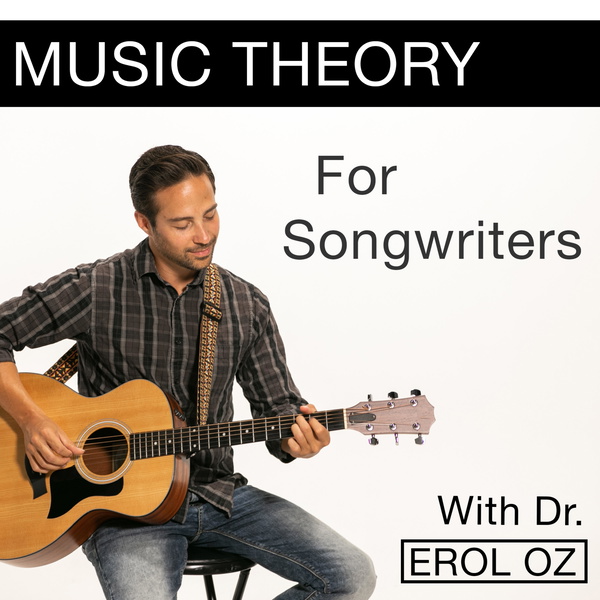
Music Theory for Songwriters
Erol OzDive into western music theory from a songwriter's perspective with Dr. Erol Oz.
| Publishes | Weekly | Episodes | 16 | Founded | 6 years ago |
|---|---|---|---|---|---|
| Category | Music | ||||
Listen to this Podcast


Latest Episodes
Not all songs have chord progressions that end on a V chord, and often songs will end with a IV resolving to I, known as the plagal cadence.
In a previous episode, we analyzed "Stand By Me" by Ben E. King. This episode discusses the "why" of the I-vi-IV-V chord progression and explain the basics of the 4-chord phrase structure. We cover Tonic, Chords with common tones, Pre-Dominant, and D... more
For the half-diminished 7th chord, we take the minor 7th chord and flat the 5th, which is why these chords are often called m7(b5). Fully diminished 7th chords also flat the 7th. When we flat a minor 7th, we get an interval called a diminished 7th ch... more
In this episode we talk about the pattern used to construct major and minor chords or TRIADS. We also discuss how to use this information to create different VOICING of a chord. We also build on our previous discussion of intervals by introducing thr... more
Key Facts


Similar Podcasts
People also subscribe to these shows.

Chart Rankings
How this podcast ranks in the Apple Podcasts, Spotify and YouTube charts.
Apple Podcasts | #190 |  Israel/Music Israel/Music |

Audience Metrics
Listeners, social reach, demographics and more for this podcast.
| Gender Skew | Location | Interests | |||
|---|---|---|---|---|---|
| Professions | Age Range | Household Income | |||
| Social Media Reach | |||||
Frequently Asked Questions About Music Theory for Songwriters
Where can I find podcast stats for Music Theory for Songwriters?
Rephonic provides a wide range of podcast stats for Music Theory for Songwriters. We scanned the web and collated all of the information that we could find in our comprehensive podcast database. See how many people listen to Music Theory for Songwriters and access YouTube viewership numbers, download stats, audience demographics, chart rankings, ratings, reviews and more.
How many listeners does Music Theory for Songwriters get?
Rephonic provides a full set of podcast information for three million podcasts, including the number of listeners. View further listenership figures for Music Theory for Songwriters, including podcast download numbers and subscriber numbers, so you can make better decisions about which podcasts to sponsor or be a guest on. You will need to upgrade your account to access this premium data.
What are the audience demographics for Music Theory for Songwriters?
Rephonic provides comprehensive predictive audience data for Music Theory for Songwriters, including gender skew, age, country, political leaning, income, professions, education level, and interests. You can access these listener demographics by upgrading your account.
How many subscribers and views does Music Theory for Songwriters have?
To see how many followers or subscribers Music Theory for Songwriters has on Spotify and other platforms such as Castbox and Podcast Addict, simply upgrade your account. You'll also find viewership figures for their YouTube channel if they have one.
Which podcasts are similar to Music Theory for Songwriters?
These podcasts share a similar audience with Music Theory for Songwriters:
How many episodes of Music Theory for Songwriters are there?
Music Theory for Songwriters launched 6 years ago and published 16 episodes to date. You can find more information about this podcast including rankings, audience demographics and engagement in our podcast database.
How do I contact Music Theory for Songwriters?
Our systems regularly scour the web to find email addresses and social media links for this podcast. We scanned the web and collated all of the contact information that we could find in our podcast database. But in the unlikely event that you can't find what you're looking for, our concierge service lets you request our research team to source better contacts for you.
Where can I see ratings and reviews for Music Theory for Songwriters?
Rephonic pulls ratings and reviews for Music Theory for Songwriters from multiple sources, including Spotify, Apple Podcasts, Castbox, and Podcast Addict.
View all the reviews in one place instead of visiting each platform individually and use this information to decide if a show is worth pitching or not.
How do I access podcast episode transcripts for Music Theory for Songwriters?
Rephonic provides full transcripts for episodes of Music Theory for Songwriters. Search within each transcript for your keywords, whether they be topics, brands or people, and figure out if it's worth pitching as a guest or sponsor. You can even set-up alerts to get notified when your keywords are mentioned.