This essential guide to podcast media training will help you understand that while your interview should sound conversational, you shouldn’t walk into podcasts unprepared.
Podcast interviews often look relaxed from the outside. The host chats, the guest answers and the whole thing seems effortless. But behind the scenes, that's not always the case.
With the right preparation, you can turn a nerve-racking interview into a focused, useful and genuinely engaging conversation. This guide covers the mistakes to avoid, how to prepare, how to shine on air and where to find further resources and podcast media training providers.
Skip straight to a list of podcast media training providers here.
Table of Contents
Common mistakes podcast guests make (and how to avoid them)
Before we look at how to prepare well, it’s worth understanding the mistakes that can make a podcast interview harder for the host, the guest and the listener. Even experienced speakers can fall into common podcast interview traps, but most are easy to avoid with the right preparation.
1. Not researching the podcast and audience beforehand
You can’t give a relevant and engaging interview if you don’t know who you’re talking to. Take time to explore the podcast’s audience and topics so you can tailor your message to their interests and needs.
Without that context, you risk pitching your message at the wrong level, using examples that don’t land or covering ground the audience already knows. And instead of sounding prepared and relevant, you may come across as though you’re delivering the same talking points you would use on any other show.
The result is often an interview that feels too broad, too basic or too far removed from the audience’s real interests and concerns.
Media training tip:
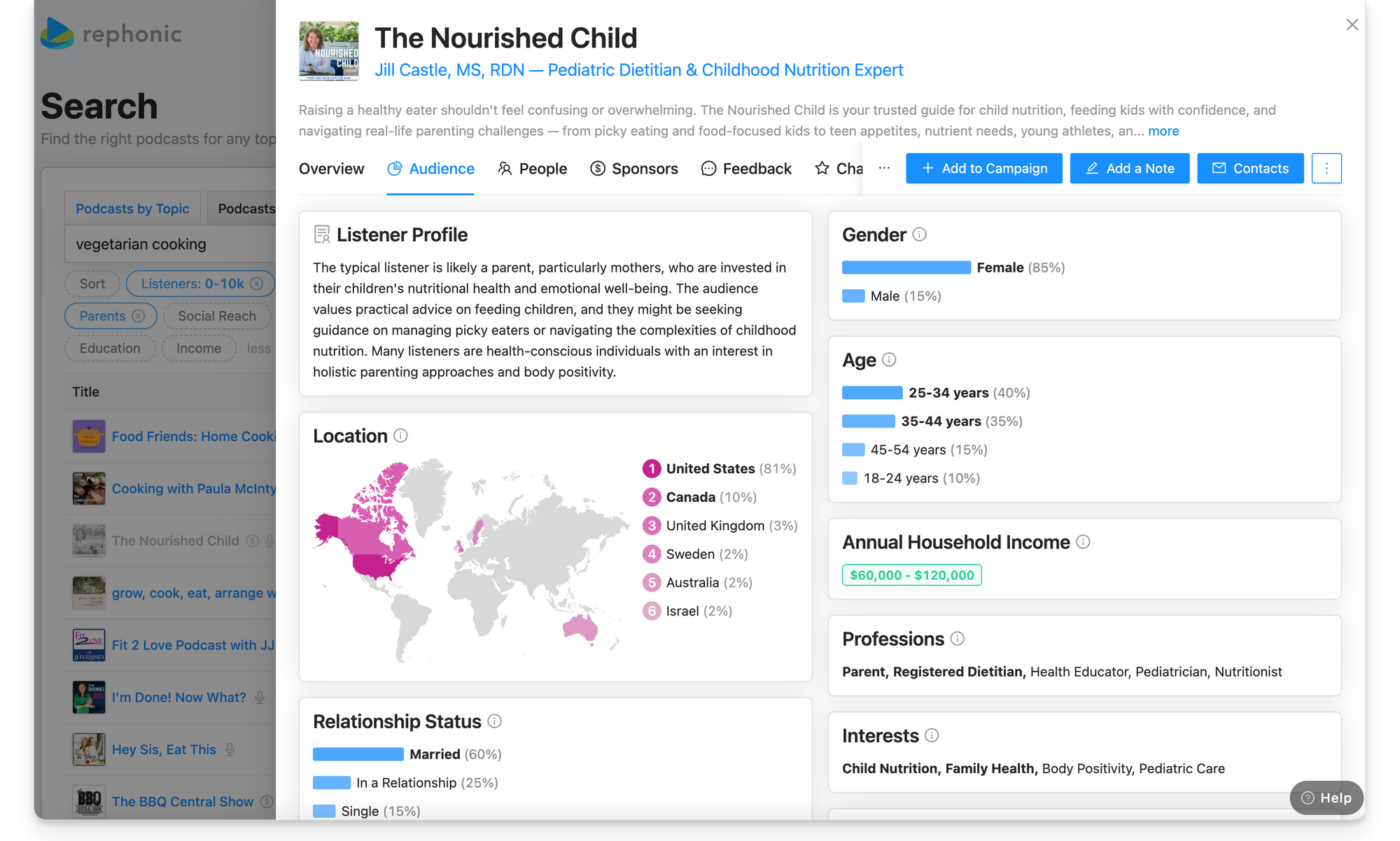
Research the podcast, host, and audience demographics. Here's where Rephonic shines. Every podcast page includes extensive details and audience analysis. You'll get a fuller picture of the audience, their interests and the topics the podcast host typically covers.
2. Forgetting to tailor the message to the host’s style and listeners
A podcast interview should never feel like the same canned message dropped into a different show. If you did effectively research the podcast audience, you’ve still wasted your time if the conversation doesn’t land.
When framing your message, make sure it aligns with your core mission so your communication advances your main purpose or cause.
Media training tip:
Develop and rehearse your core message and key talking points. Before the interview, decide what you most want listeners to understand, remember or do after hearing you speak. Then break that message into a few clear talking points and memorable soundbites you can return to naturally throughout the conversation, without sounding scripted.
Read this article to see how understanding the audience helps you frame your message appropriately.
3. Poor vocal delivery and technical issues
Podcast interviews are a conversation between a host and guest with the audience a 'fly on the wall' that gets to listen in.
People just don't want to listen to bad audio or watch a poor video. Fuzzy sound, poor lighting, bad internet connection, stumbling speech—these are all issues that can create a bad experience for you, the audience and the host.
At best, these issues distract listeners from what you’re saying, even when your ideas are strong. At worst, people will turn off the episode and leave a scathing review. Ratings go down and the podcast might lose fans.
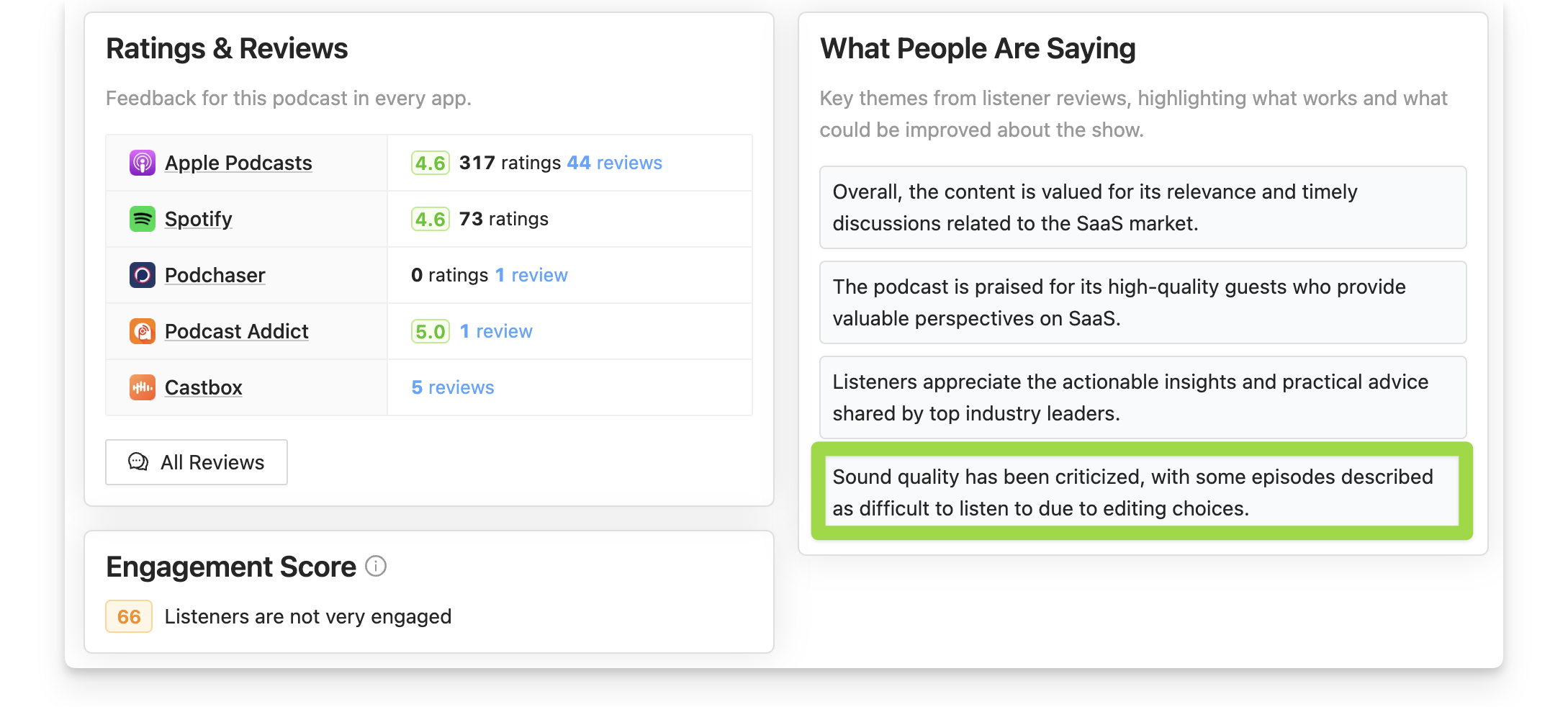
The screenshot below shows the Feedback section that you'll find on Rephonic for every podcast. It finds common review themes and you'll be surprised how often poor audio quality is mentioned. As a guest you have a responsibility to make sure your setup is as professional as possible.
Media training tip:
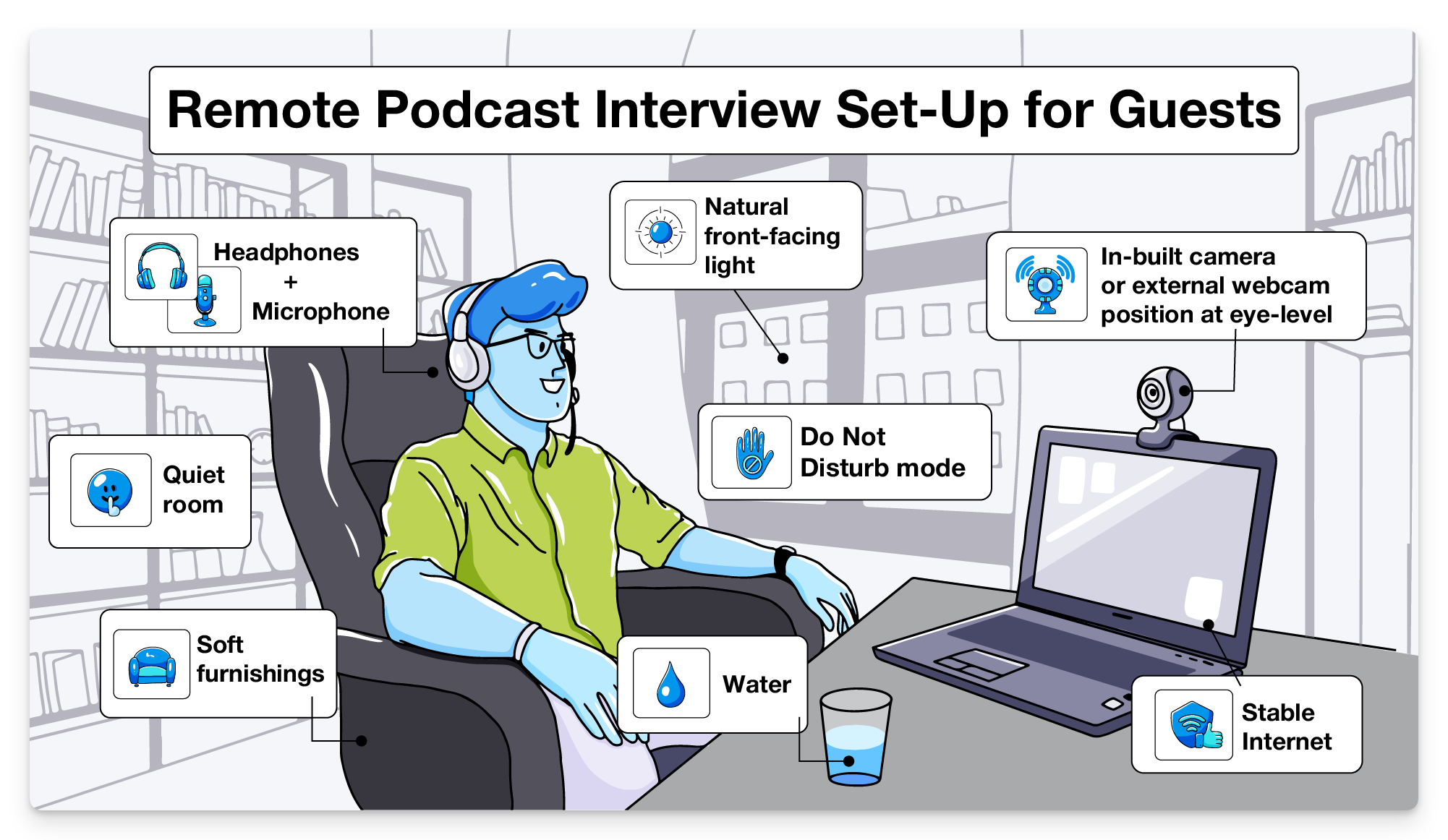
Consider your technical setup: Poor sound quality or flat delivery can distract listeners from what you’re saying, even when your ideas are strong. Before the interview, check your microphone, headphones, internet connection and recording setup, and choose a quiet space where you’re unlikely to be interrupted.
It’s also worth paying attention to your voice: learn how to slow down, vary your tone and pause between ideas so you sound confident rather than rushed. You don’t need a broadcast-quality studio, but you do need to make the experience easy for the host and pleasant for listeners.
Here's how to set up for remote podcast interviews.
4. Over-talking or rambling without clear key talking points
There's an art to conversing, answering questions and still delivering your message. But without clear talking points you can easily find yourself just talking without really knowing what you wanted to say.
Your answers will probably seem vague or repetitive and you risk over-answering the question or rambling long after the host wants to move on.
You don’t need to memorize a script, but you should know the point you’re making, why it matters and when to stop.
Media training helps you manage that message during podcast appearances so you can deliver key talking points in a concise, confident way.
Media training tip:
Practice with mock interviews: Practicing helps you build confidence and refine your delivery. You could:
- Ask a colleague or friend to interview you as if they were a podcast host.
- Record yourself answering questions, then listen back. You'll soon notice places where you ramble, speak too fast or miss the point.
- Explain your points to someone who knows nothing about the topic to help you learn how to explain simply and clearly.
- Practice answering difficult or off-beat questions with a colleague.
- Do a mock interview using a podcast platform (e.g., Riverside or Zoom) so you can check your microphone, camera, lighting and internet connection as well as honing your delivery skills again.
5. Lack of storytelling or engaging content
While talking points (and facts) are important parts of the interview equation, on their own they're not enough.
Listeners may tune out if your interview only consists of facts and figures, because people connect better with examples, stories and actual situations. They need concrete examples that help them understand why your message matters.
Media training tip:
Prepare engaging stories and examples relevant to the podcast's theme. Make your data stick with the audience by anchoring it with real-world stories and anecdotes. If you plan to use podcast guesting as a PR strategy, develop a bank of stories to cover your messages then select the most appropriate ones for that audience.
The same story bank can also strengthen your pitch by highlighting your unique experience and knowledge when approaching podcasters, while sharing tips that add value to the conversation.
Learn more: Read this storytelling article to learn more on the benefits of storytelling in podcasts and how to choose and tell an interesting story.
6 podcast media training tips for podcast guests
Media training can help demystify media appearances, making the process accessible and building confidence for effective engagement. Podcast media training can increase authority and brand visibility by helping a client build a visible, credible online profile and positioning them as credible experts.
Training programs typically provide a mix of strategic messaging and practical performance skills. Being clear about your expertise and showing up consistently online strengthens how listeners, journalists and producers perceive you.
Podcast media training tips include the following:
1. Balance professionalism with authenticity and natural conversation style
Great podcast guests can speak clearly about their company’s message but still respond naturally to the host.
You'll want to check the company guidelines - policies, brand messaging, and legal and chat to internal comms for PR guidelines.
But natural conversation means letting some of your personality shine through. Prepare your origin story, perhaps to show your professional journey, rather than a personal background. Share real stories and examples of where your company has succeeded, or failed and learned/grown from that.
Learn more: We wrote about podcast guesting as an employee, and included real-world interview examples for you to learn from.
2. Blocking and bridging
Blocking and bridging are techniques to help you stay on track when the host asks questions that could lead you away from your message. Blocking is briefly acknowledging the question without being negative. Bridging helps you move the answer back to the message you do want to share.
For podcast guests, this doesn’t mean dodging questions. It means staying calm, answering in a way that’s fair and guiding the conversation back to your expertise, your key message or what will be most useful for the audience.
Learn more: Check out The Bridging Technique and related articles from Media First, and this PDF from UNC Health.
3. Vocal techniques
Speaking in normal conversation is one thing; conversing during podcast interviews is harder. It helps to be aware of (and practice) vocal skills like:
- Varying pitch and tone to keep your voice from sounding monotonous.
- Changing pace, speed up a little to show enthusiasm, or when a story demands it and slow down to emphasize key talking points.
- Deliberate pauses: pausing strategically gives listeners time to absorb your ideas. Pausing before answering a question gives you time to think and helps you avoid using too many filler words ("um", "you know", "like" etc.)
- Speaking clearly. Practice pronouncing important names, technical terms and brand phrases so you know you won't stumble.
- Breathing - learn breathing techniques to calm nerves and to help with clear delivery.
Learn more: Read How to Nail Soundbites for advice on choosing and delivering short, memorable statements.
4. Use subtle calls-to-action
What do you want to happen as a result of your podcast interviews?
In other words, what goals did you have for the interview? You might want:
- New community members
- Engagement
- New sign-ups to your newsletter or social media pages
- Sales
- To introduce yourself as a thought leader or show your subject matter expertise on air.

Use a call-to-action (CTA) that links to your goals but deliver it in a way that feels subtle and natural, not salesy.
Learn more: Read this article to learn how to create and deliver effective calls to action.
5. Handle unexpected questions or mistakes gracefully
Even seasoned podcast guests make mistakes - it's part of being human, after all. First, don't panic. A stumble or two can make you seem more relatable and most listeners are far more forgiving than nervous guests imagine.
If you mispronounce a word, lose your train of thought, call the host by the wrong name or can't answer a question, here are a few techniques to help.
Pause before answering. A brief pause gives you time to gather your thoughts.
Acknowledge what you can and can’t answer. If a question is outside your expertise or you don’t have the information, say so clearly. It’s better to be honest than to guess, speculate or over-promise.
Bridge back to what’s useful for the audience. If the question takes you off track, answer briefly where appropriate, then steer the conversation back to your key message or the part of the topic that will help listeners most.
Recover and move on. Correct yourself simply, take a breath, laugh or apologize if that's appropriate and continue.
6. Listen to the conversation
If you're new to podcast guesting, the advice to listen might sound obvious. But guests (and hosts) are sometimes so focused on what they want to say that they forget to listen to what's actually being said.
Prepare using all the techniques above. Then you'll be able to respond to questions appropriately, ask follow-ups of your own, recognize and laugh at jokes, tell stories for that audience, and have a deeper, richer conversation that delivers value for you, the host and the audience.
Podcast media training providers
Podcast media training providers range from corporate workshops for executive teams to affordable online courses for individual guests, so the right choice depends on your budget, location, experience level, and whether you are invested in broad media training or podcast-specific coaching. Being invested in your media training journey—through time, effort, or resources—can significantly enhance your ability to engage with podcasters and prepare for podcast interviews.
Do an online search for providers in your area or check out some of the following media training organizations.
Based in the US, UK, Australia or New Zealand these options range from one-person operations to large, established brands, and each course is run by people with many years of speaking and media experience.
- Throughline Media training: US-based, custom in-person and live online workshops aimed at executives and spokespeople.
- Harrow Communications: media training for CEOs, entrepreneurs and authors. Based in California, USA. Offers a free initial 15-minute consultation.
- Stephanie Weaver: media training, particularly focused on Tedx. Offers a free 30-minute video consultation.
- Media Training Worldwide: US-based. Includes many online courses in crisis communication, media training and public speaking.
- Spokesperson Media: Based in Australia. Conduct workshops in major Australian cities aimed at corporate executives and spokespeople.
- Easily Said: Based in New Zealand. Jason Gunn offers in-person workshops and an online course teaching participants how to speak confidently and personably on camera.
- Higginson: Offers in-person training for teams, held at London Broadcast Studios in the UK.
- Media Training Ltd: UK-based, offers a one-day, in-person or live online media training course for 1-6 people (online) or up to 10 people at their London studio.
- Impact Institute: Based in Australia, with workshops for 1-4 people. Training includes message crafting, interview tactics such as bridging and hooks, live journalist interviews, video review and feedback.
- The Media Coach: Aimed at CEO and C-suite executives. They offer workshops in UK, Spain and Italy, and on Zoom.
Final thoughts
Are you thinking about being a podcast guest? Are you worried, excited or nervous about how your interview will go?
You can prepare for your interview to make the whole event less stressful and more pleasant.
Remember to:
- Research the podcast and its audience using Rephonic.
- Prepare your talking points and stories.
- Practice your delivery during mock interviews and prepare for unexpected questions.
- Listen actively, and pause before you reply.
- Breathe.
- Smile.
Before your interview, you can practice informally using the suggestions in this article, listen to podcasts or watch videos on the subject, or look for more formal media training in your area or online.
Looking to use Rephonic as your podcast search engine and research partner? Sign up for your 7-day free trial.
Article credits

Written by Lyn McNamee, podcast-PR writer with years of experience transforming podcast insights into practical, results-focused playbooks.

Edited by Becca Butcher, marketing specialist who frequently analyzes Rephonic’s data across 3 million podcasts.
How to Use Podcasts for Link Building [Full Guide]
Quality backlinks should be a vital part of your SEO strategy, and in our opinion, building links via podcast guesting is a highly underrated tactic.
How to Spy on a Competitor’s Podcast Guesting Strategy
In this article, we break down why piecing together their competitor’s podcast guesting strategy matters and how to use Rephonic to get a clear view of what’s happening behind the scenes.