If a client has tasked you with producing a killer new show, the most efficient way to explore the podcast landscape and find a winning podcast niche is with Rephonic.
Podcast production agencies like Voxtopica have been using Rephonic for years as part of their workflow because, let’s face it, searching Spotify, Listen Notes and podcast websites is a time-consuming process.
Instead of bouncing from platform to platform, you can do all your research and outreach on one platform, gaining a clear view of the podcast landscape in a fraction of the time.
This article shows the three essentials you need to find your client’s perfect niche, and how using Rephonic can help.

Table of Contents
How Rephonic helps you find a podcast niche
To find a podcast niche, you need to:
- Understand your client (you do this!).
- Understand the podcast landscape (Rephonic helps you do this).
- Find a niche (that’s your call, based on your client’s expertise, their target audience and the podcast landscape).
Let’s say you have a client who is a wine tour operator.
The following Rephonic features and data help you understand the podcast landscape for your client’s subject area:
- Search tool & filters
- Podcast data
- Audience data
- Transcript search
- Feedback
Let's explore exactly how they can help you find the right niche.
1. Search tool & filters
🍷Use the search bar
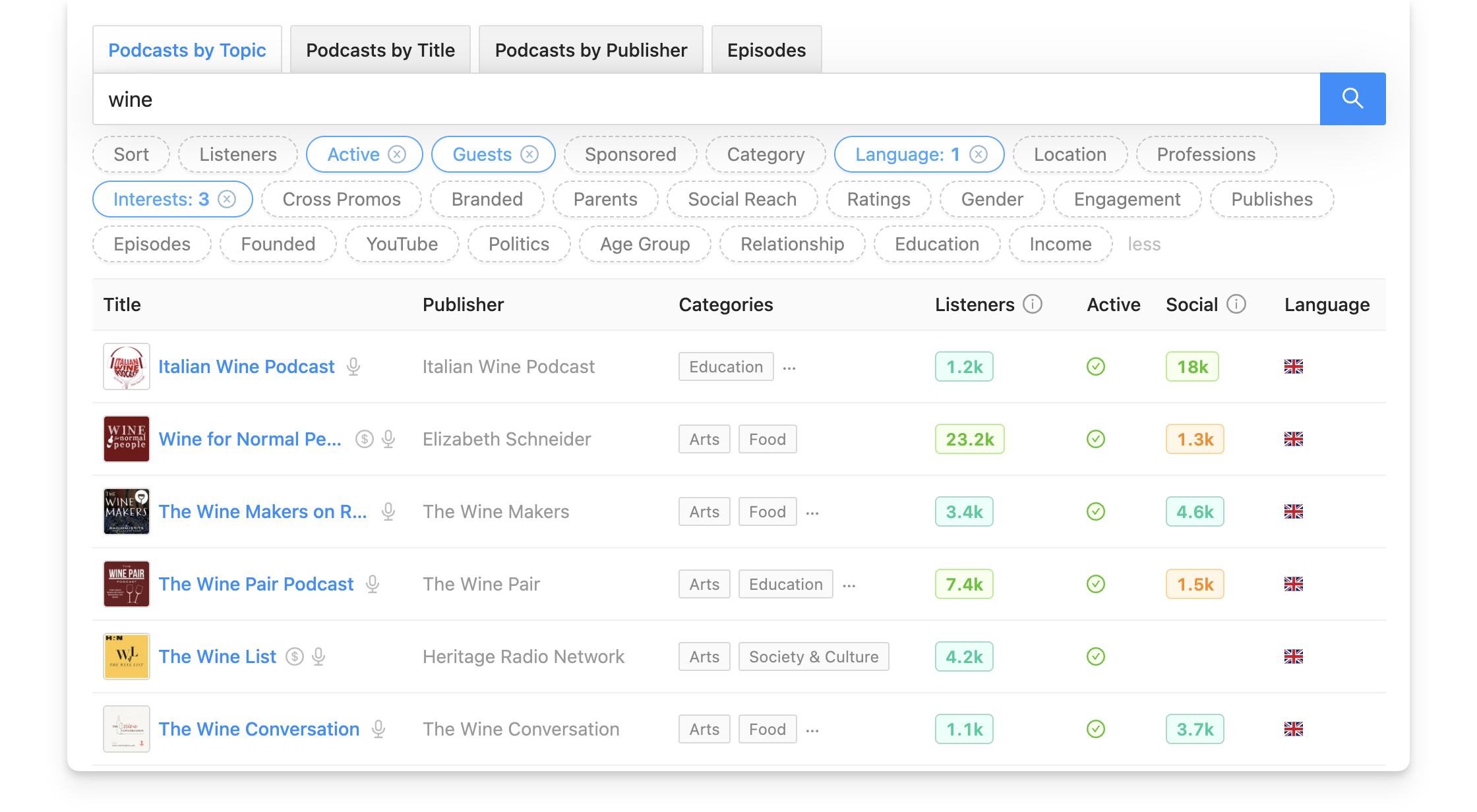
Open Rephonic’s search bar and select Topics. Then, enter subjects or keywords associated with “wine” and “travel”. For example, we might research “wine tasting”, “culinary travel”, “wine making”, “wine+travel”, “wine tours” and so on.
🍷Refine your search with filters
Rephonic lets you add up to 25 filters, so you can get ultra specific about the podcast’s size, audience, maturity, etc. So, if you already know your client’s target audience, you can set filters to find podcasts with a similar audience.
Perhaps you only want to see current podcasts, in which case you’d set the Active filter. Or, your client may want to interview people, so you could set the Guests filter to see podcasts with that format.
I’d also search without those filters to see what other formats these niche podcasts cover now—and in the past—and dive into which format seems to have the most success.
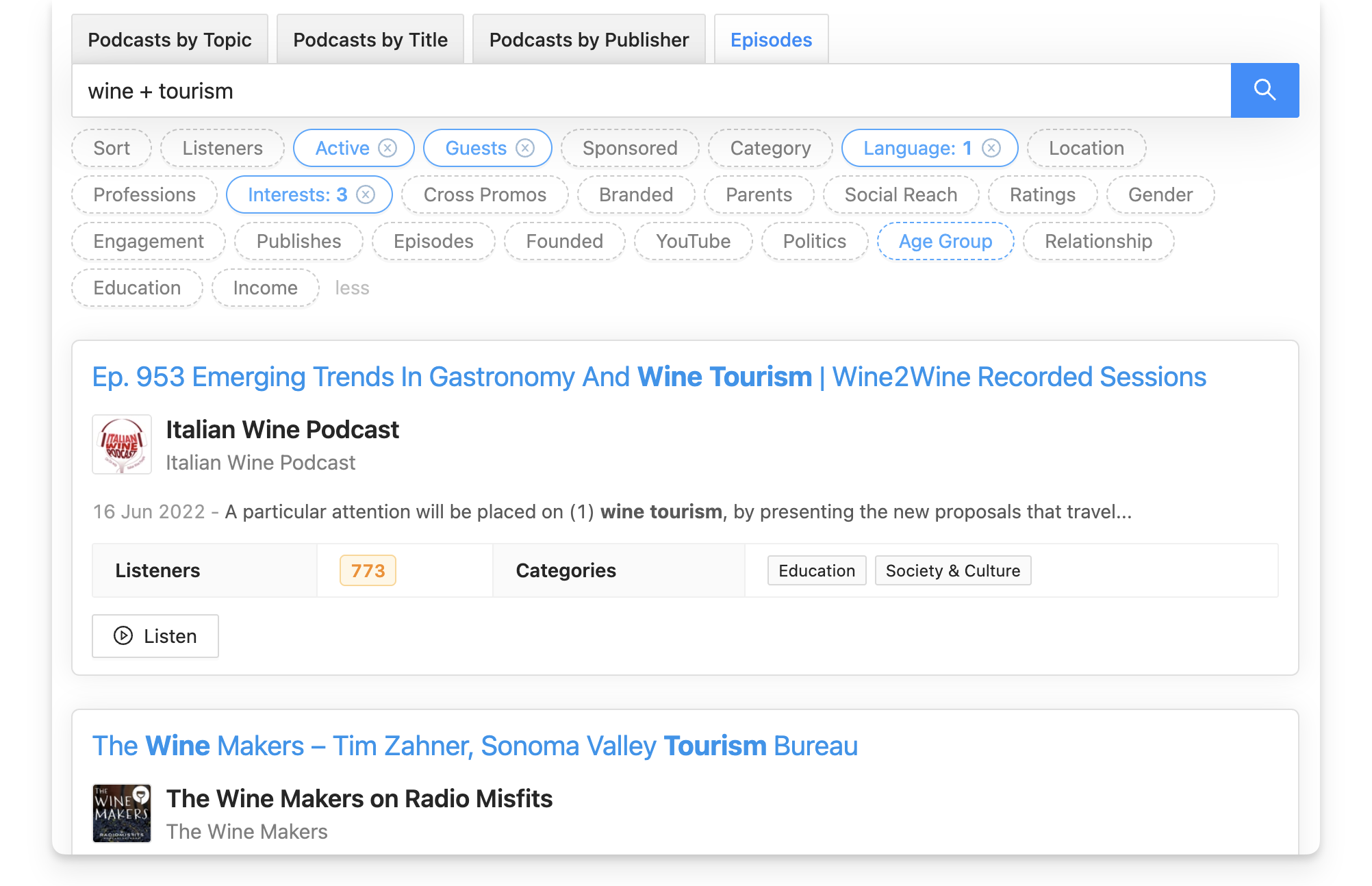
Repeat your searches using the Episodes option, which reveals specific episodes that discuss the topic, rather than whole podcasts. Doing an episode search can bring out interesting podcast options that mightn't surface in a broader topic search.
For example, here are the results from an Episode search I did using the keyword 'wine+tourism'.
🍷Look for related shows
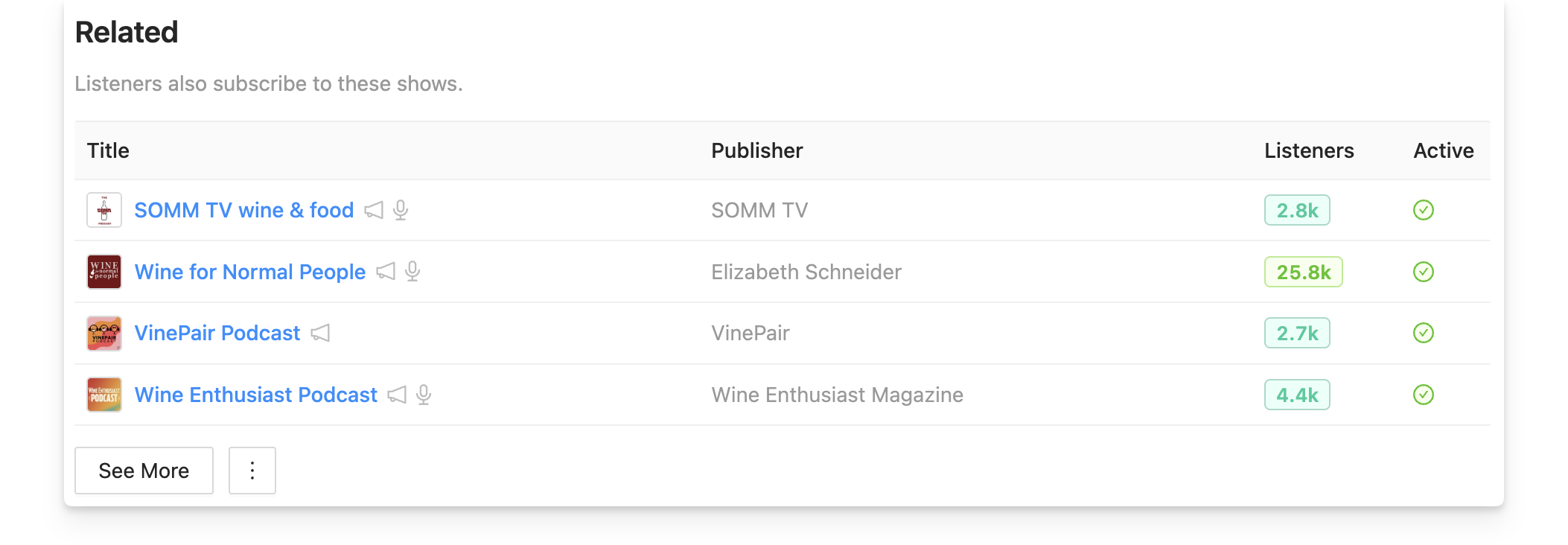
Every podcast page on Rephonic opens in an Overview. tab When you find a highly relevant show open the page and scroll down to the Related feature to find similar shows with a shared audience. This is a helpful way to find niche podcasts that may not surface in your keyword searches.
Once you've found many podcasts in the wine and travel landscape, you can learn even more by researching some of these shows in more depth.
There’s an enormous amount of podcast data scattered around the internet, but it's difficult to find. That’s research you probably don’t have time for, which is why Rephonic’s already gathered and analyzed it for you.
Here's how we help you dive deeper into the landscape so your client can decide on their podcast niche.
2. Check podcast data
Learn more about each show. For example:
- What format do they follow? Most podcasts use one or a combination of a few popular formats.
- How successful are they? Rephonic provides estimated listener numbers, chart rankings and follower numbers on Spotify and other apps to help you gauge popularity.
- Are their listeners engaged? (Check their social media platforms and engagement scores.)
- Check each podcast’s Recent Topics section. What topics do they have in common?
Listen to episodes within Rephonic too, because sound quality is so important in an audio-first medium like podcasting.
Find out what your client thinks. Add podcasts to a Campaign and send your client the link.
3. Audience demographics
You've made a podcast campaign. Now find out what audiences those podcasts target.
Rephonic analyzes all the data and collates that into audience info. Go to each podcast’s Audience tab and find their likely gender skew, ages, locations, professions, interests and even household income. (Here’s a more detailed look at how to check if a podcast matches your target audience.)
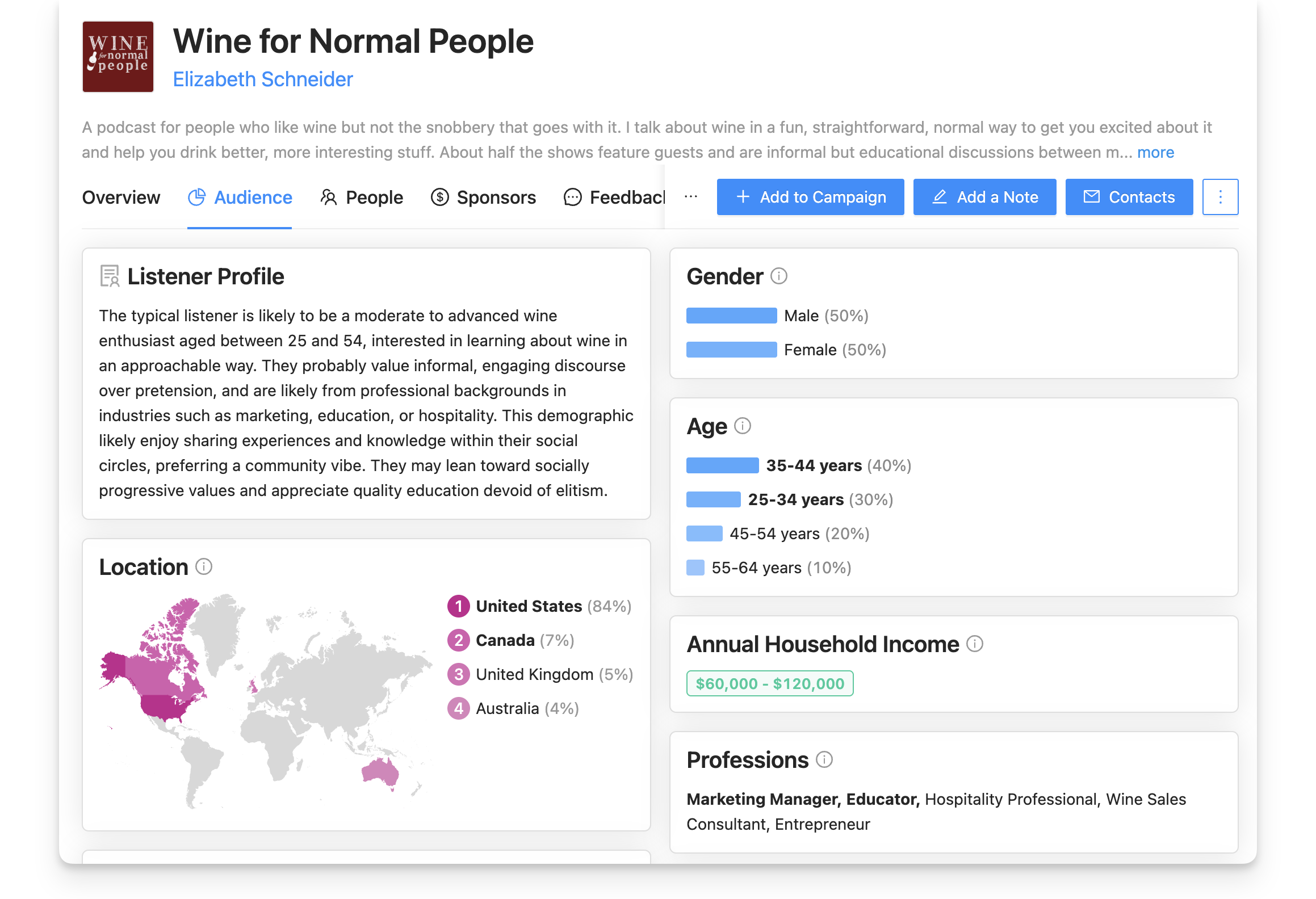
If a successful podcast has an audience similar to your client’s, it’s worthwhile going further to see what’s contributing to their success, to see if you can put something similar in place (with a unique twist) for your client’s podcast.
4. Transcript search
One way to analyze a podcast's success involves using Rephonic's episode transcripts. To get a transcript, simply open an episode and tap the Transcript button.
Check through several episodes to help you spot:
- The topics they cover again and again
- The tone (informal, expert-led, one-to-one conversation, panel discussion, beginner-friendly or advanced?)
- How hosts structure stories or interviews
- Patterns in the podcast content or structure. For example, does every episode offer actionable advice? Are there special questions they ask every guest? Do they have a regular segment, e.g. "what's on this month" or "wine making news, views and current events".
- Headlines and descriptions: How are they structured? Do they tease the topic or make it clear from the start? Are there recurring hooks?
- How do they create content? Are their episodes tightly structured or free-flowing?
All this—and more—gives you a better understanding of their unique perspective and why listeners keep coming back.
🍷Check for positioning
When you study transcripts, you’ll often notice various topics, words or phrases that keep showing up. These aren’t accidental; they reveal how the show positions itself and what it wants to be known for.
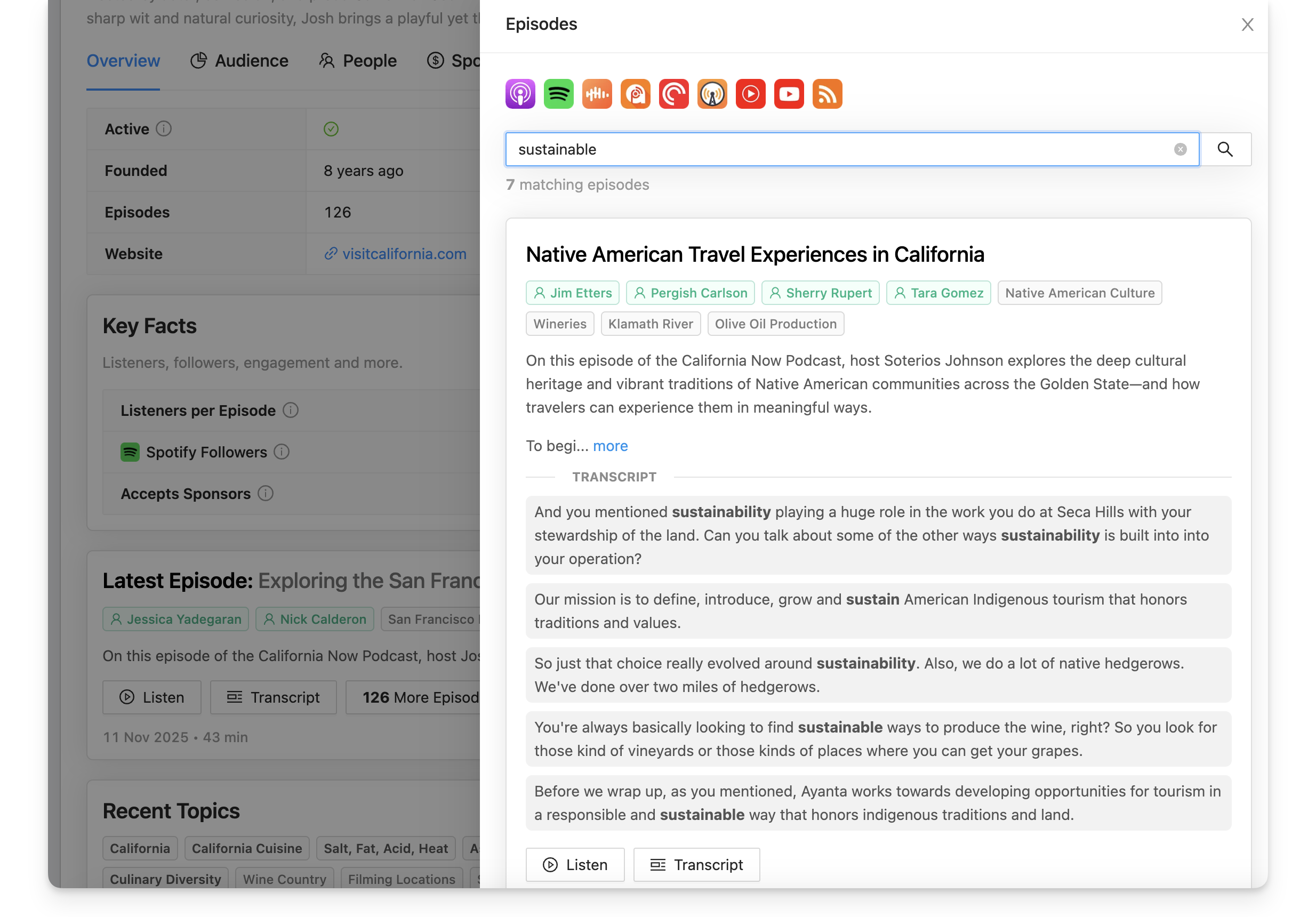
For a wine-themed podcast, phrases like “small family-run vineyards” repeated across many episodes might position a show as artisanal and authentic. "Luxury wine escapes" might indicate it's targeting an upscale travel audience, while words like "sustainable" or "natural" position it as eco-conscious.
You can enter key positioning signals into the top search bar of a podcast's Episodes section and Rephonic will look for the phrase across all the show's transcripts. (Of course, you can use this feature to find common themes and topics too.)
For example, for our wine tour client we might enter “luxury travel,” “sustainability,” “behind the scenes”, “wine tours” and so on.
5. Scan reviews and listener feedback
What are listeners talking about and how do they rate a podcast overall. Do they comment on specific episodes? Other topics? You could open the ratings on each separate app. Or, see everything at a glance on the podcast's Feedback tab on Rephonic.
Here you'll find links to a podcast's ratings and reviews in every app, plus a summary of common themes across all the reviews. You can also open the blue links to see listeners' comments for yourself.
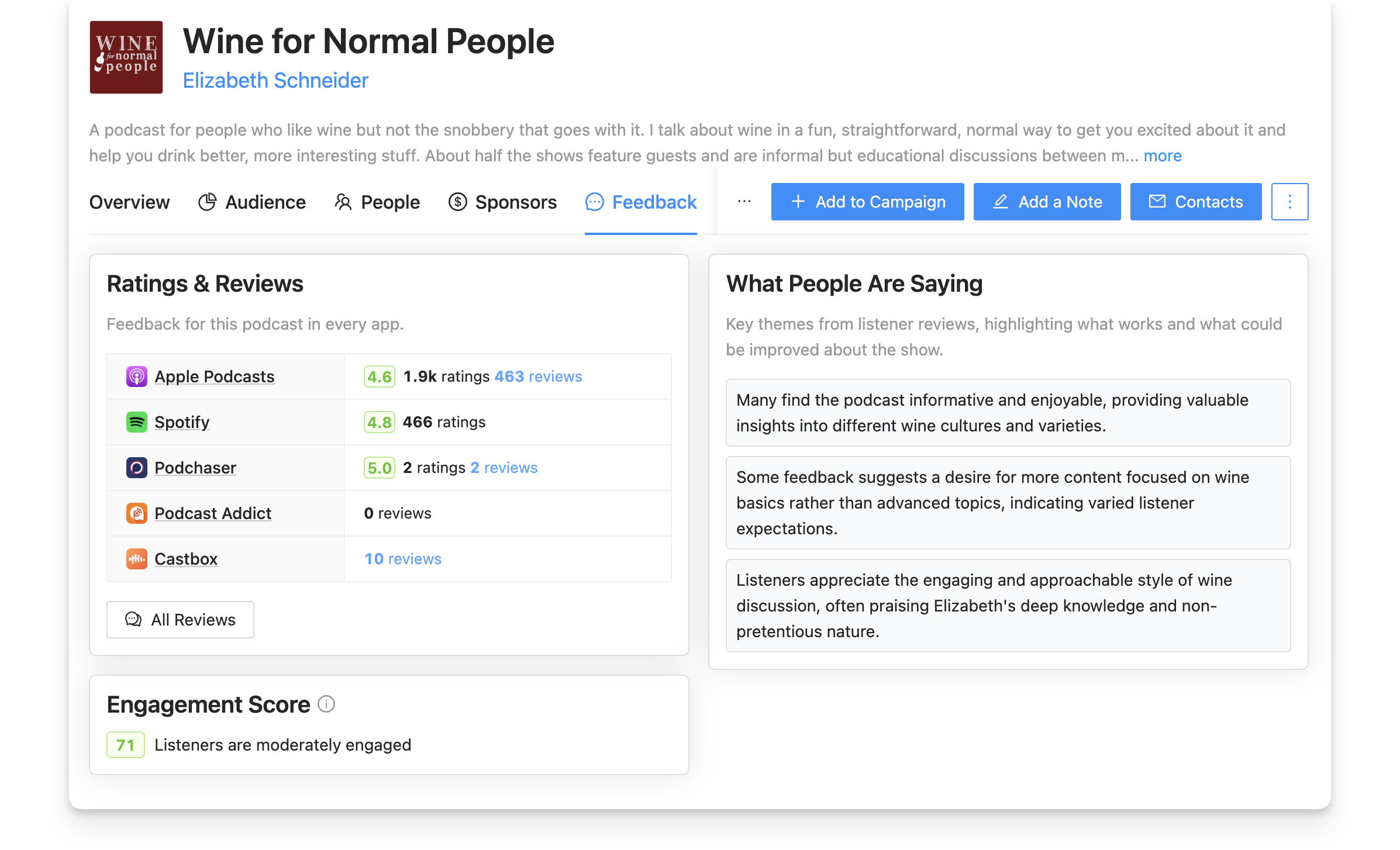
The Feedback tab helps you work out
- What listeners love most
- What they complain about
- Recurring themes in comments (e.g., “great tips,” “love the guests,” “host is too chatty”)?
These comments are real-world clues about why the audience sticks around.
💡Top Tip
Add podcasts to a campaign within Rephonic and share it with your client so they can explore the shows and share what they like/dislike about them. (Rephonic will give your client read-only access if they aren’t a member of your Rephonic team.)
Final thoughts
When you have a clear, detailed understanding of the podcast landscape, everything becomes easier. You can see what’s working, spot the gaps, understand how shows position themselves and make smarter, more creative decisions about where your client fits.
With that level of insight, you’re well-positioned to choose a podcast niche that’s not only informed and strategic, but genuinely exciting for your client to build on.
Ready to understand the podcasting landscape? Start with a 7-day free trial.
Article credits

Written by Lyn McNamee, podcast-PR writer with years of experience transforming podcast insights into practical, results-focused playbooks.

Edited by Becca Butcher, marketing specialist who frequently analyzes Rephonic’s data across 3 million podcasts.
How to Get Podcast Transcripts & Search for Keywords
With podcast transcriptions at your fingertips, you can research faster and make better, more accurate decisions than anyone working with audio files only.

How to Spy on a Competitor’s Podcast Guesting Strategy
In this article, we break down why piecing together their competitor’s podcast guesting strategy matters and how to use Rephonic to get a clear view of what’s happening behind the scenes.